
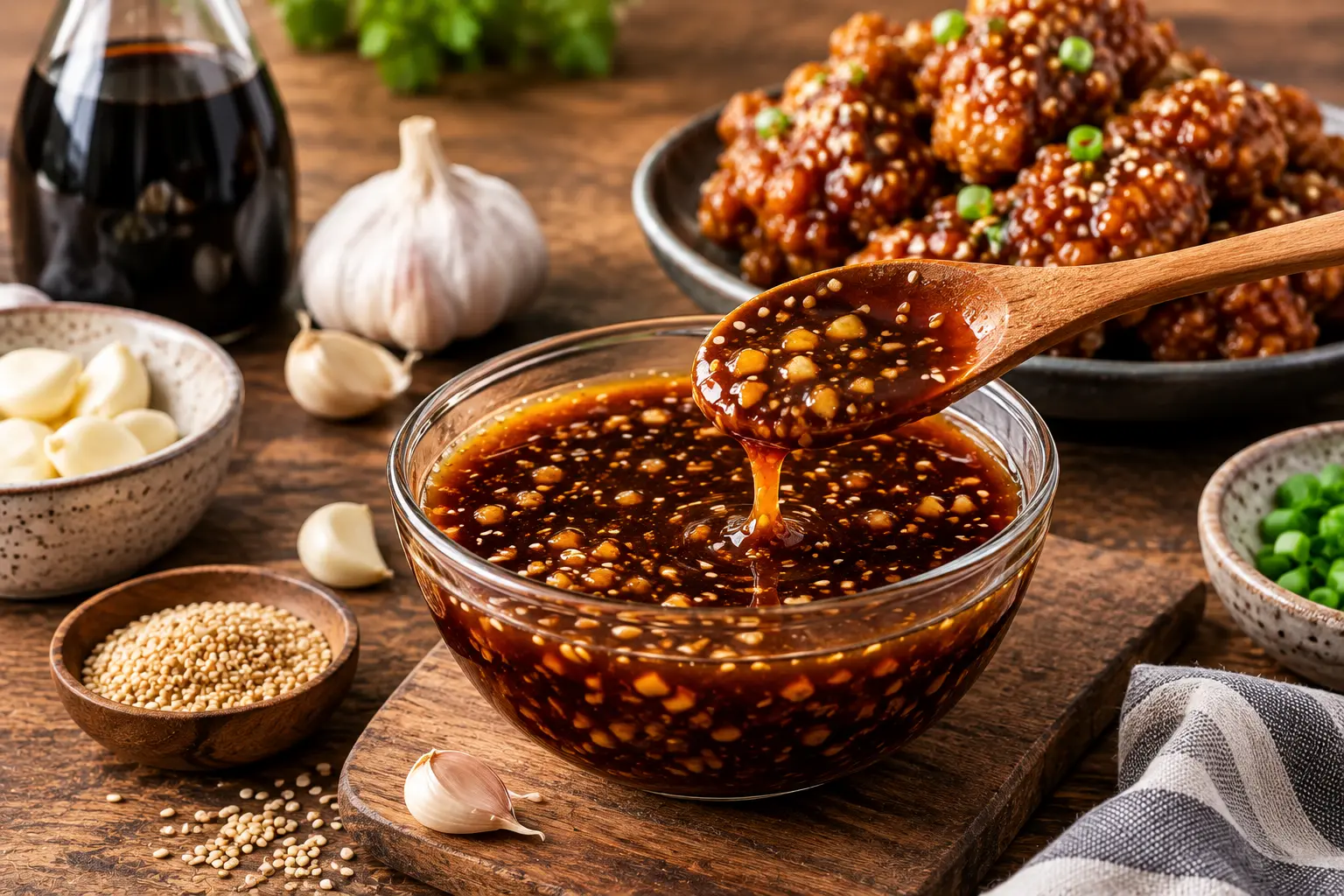
Want to make Bonchon-style soy garlic chicken at home? This homemade copycat recipe combines crispy double-fried chicken wings with a sweet, savory garlic glaze made from soy sauce, brown sugar, garlic, ginger and mirin.
The goal is to recreate the balance of crunch, sweetness and garlic flavor that makes Korean-style soy garlic chicken so popular.
Important: This is an independent Bonchon-inspired recipe, not Bonchon’s official or proprietary formula. The ingredients and cooking method may differ from those used in Bonchon restaurants.
If you want to compare the homemade version with the restaurant’s menu, explore our Bonchon Korean Fried Chicken Guide or see how we rank Bonchon’s chicken sauces.
Bonchon-Inspired Soy Garlic Chicken: Recipe Overview
| Recipe Detail | Information |
|---|---|
| Recipe | Soy Garlic Korean Fried Chicken Wings |
| Style | Bonchon-inspired copycat |
| Preparation Time | Approximately 15 minutes |
| Cooking Time | Approximately 30–40 minutes, depending on batches |
| Total Time | Approximately 45–60 minutes |
| Servings | Approximately 4 |
| Chicken | 2 pounds of wings |
| Cooking Method | Double-frying |
| Flavor | Sweet, savory and garlicky |
| Difficulty | Intermediate |
Recipe note: Times and yield are estimates. Actual cooking time depends on wing size, oil temperature, equipment and the number of batches.
What Makes Bonchon-Style Soy Garlic Chicken Different?
Korean fried chicken is known for its thin, crispy coating and flavorful sauces.
One technique commonly associated with Korean-style fried chicken is double-frying. Instead of frying the chicken once, the pieces are fried, rested briefly and fried again at a higher temperature.
This can help produce a crisp coating that holds up better when a small amount of sauce is applied.
For this homemade version, we use three techniques:
- A light starch coating to create a crisp exterior.
- Two frying stages to develop crunch.
- A thin layer of soy garlic glaze rather than completely soaking the chicken in sauce.
The result is a homemade interpretation of the texture and flavor associated with Korean fried chicken.
For more background on the cooking method, read our What Is Double-Fried Chicken? Guide.
Ingredients for Soy Garlic Chicken Wings
This recipe uses two groups of ingredients: one for the crispy chicken and another for the glaze.
Ingredients for the Chicken
| Ingredient | Amount |
|---|---|
| Chicken wings, separated into flats and drumettes | 2 pounds |
| Salt | ½ teaspoon |
| Black pepper | ¼ teaspoon |
| Potato starch or cornstarch | 1½–2 cups, for coating |
| Neutral frying oil | Enough for approximately 2 inches in a suitable heavy pot |
Which starch is better?
Potato starch is a popular choice for Korean-style fried chicken because it can create a light, crisp coating. Cornstarch also works.
You do not need to force all 2 cups of starch onto the chicken. Use enough for an even coating and shake off the excess.
Ingredients for the Soy Garlic Sauce
| Ingredient | Amount |
|---|---|
| Soy sauce | ⅓ cup |
| Mirin | ¼ cup |
| Brown sugar | 2 tablespoons |
| Garlic, finely minced | 5 cloves |
| Onion, finely minced | ¼ cup |
| Fresh ginger, grated | 1 teaspoon |
| Cornstarch | 1 teaspoon |
| Water, for slurry | 1 tablespoon |
| Neutral oil | 1 teaspoon |
| Toasted sesame seeds | Optional garnish |
| Sliced scallions | Optional garnish |
This sauce combines salty soy sauce, sweetness from brown sugar, aromatics from garlic and ginger, and the flavor of mirin.
Mirin commonly contains alcohol. If you avoid alcohol for religious, personal or dietary reasons, use a suitable alcohol-free alternative and check the labels of other packaged ingredients.
For a broader discussion of alcohol-related ingredients in restaurant sauces, see Does Bonchon Use Alcohol in Their Sauces?.
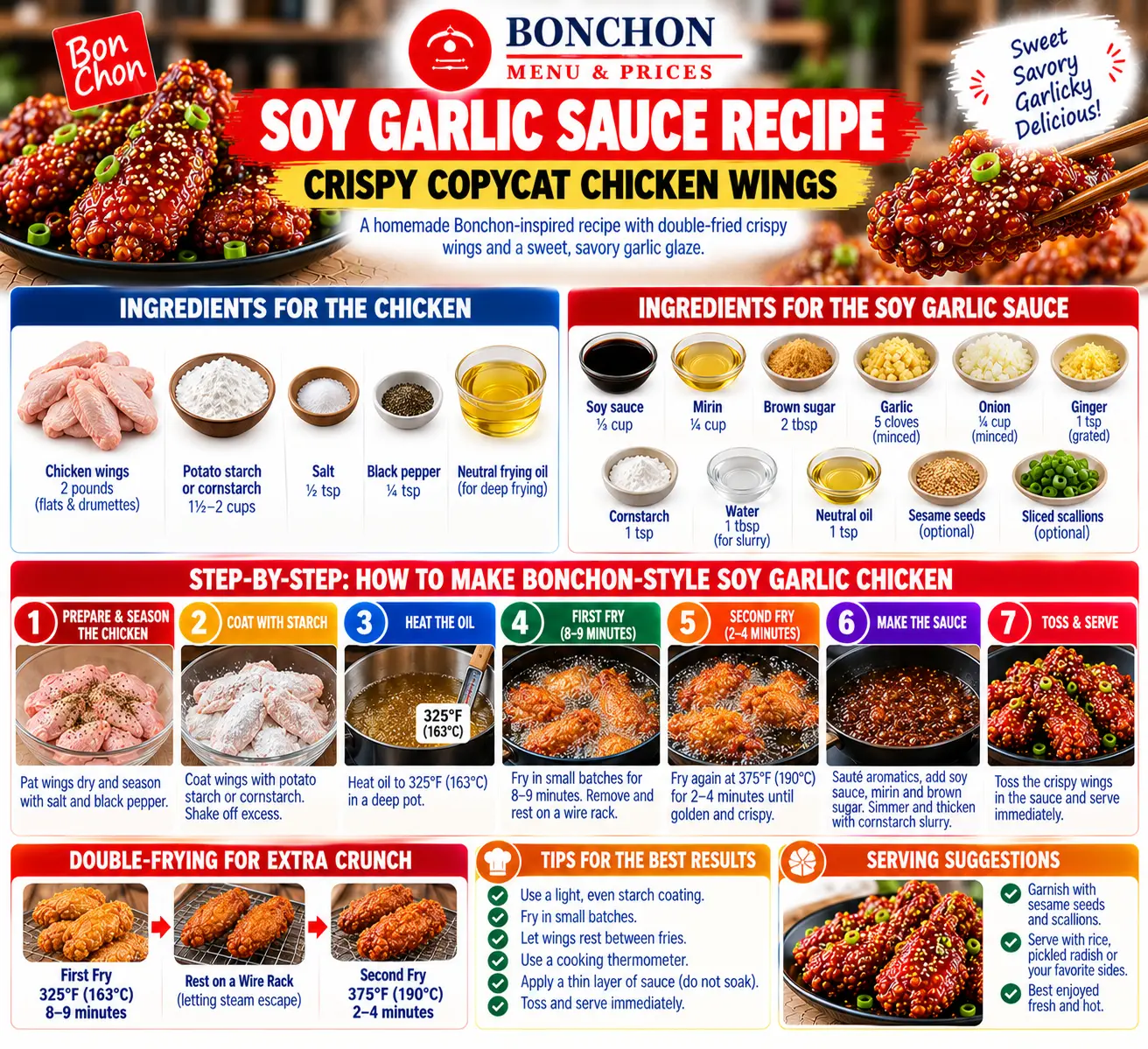
How to Make Bonchon-Style Soy Garlic Chicken
Follow these steps to prepare the chicken and glaze.
Step 1: Prepare and Season the Chicken
Pat the chicken wings dry using paper towels.
Place them in a large bowl and season evenly with salt and black pepper.
Drying the surface helps the starch coating adhere and reduces excess surface moisture.
Do not rinse raw chicken, as splashing water can spread bacteria around the kitchen.
Step 2: Coat the Wings with Starch
Place the potato starch or cornstarch in a shallow bowl.
Coat each wing lightly and evenly, shaking off excess starch.
Arrange the coated wings on a tray while the frying oil heats.
A thick layer of loose starch can create uneven patches, so aim for a thin, consistent coating.
Step 3: Heat the Frying Oil
Pour enough neutral oil into a heavy, deep pot to reach approximately 2 inches, leaving ample room at the top.
Do not fill the pot more than halfway with oil.
Heat the oil to approximately 325°F (163°C) using a suitable cooking thermometer.
Keep the pot stable, avoid overcrowding and never leave hot oil unattended.
Step 4: First Fry the Chicken
Carefully lower a small batch of wings into the hot oil.
Fry for approximately 8–9 minutes, adjusting as necessary for the size of the pieces and the oil temperature.
The coating should begin to firm up and develop a light golden color.
Remove the wings with a suitable utensil and transfer them to a wire rack.
Allow them to rest for approximately 5 minutes.
Food safety: Frying times are estimates. Use a food thermometer to confirm that the thickest part of the chicken reaches at least 165°F (74°C), without touching the bone. Never rely on color alone to judge whether chicken is fully cooked.
See the USDA Safe Minimum Internal Temperature Chart.
Step 5: Fry the Wings a Second Time
Increase the oil temperature to approximately 375°F (190°C).
Return the wings to the oil in small batches.
Fry for another 3–4 minutes, or until the coating becomes crisp and golden.
Actual timing may vary. Check the chicken’s internal temperature and avoid overcooking.
Transfer the finished wings to a clean wire rack.
Why fry twice?
The second frying stage helps remove additional surface moisture and improve the coating’s crispness.
This is especially useful when the chicken will be brushed with a glaze.
How to Make the Soy Garlic Glaze
You can prepare the glaze while the chicken rests between frying stages, provided you can safely monitor the hot oil.
Step 1: Cook the Aromatics
Heat 1 teaspoon of neutral oil in a small saucepan over medium heat.
Add the minced garlic, onion and grated ginger.
Cook for approximately 1–2 minutes, stirring frequently, until fragrant.
Avoid burning the garlic because it can develop a bitter taste.
Step 2: Add the Soy Sauce, Mirin and Sugar
Pour in:
- ⅓ cup soy sauce
- ¼ cup mirin
- 2 tablespoons brown sugar
Stir until the sugar dissolves.
Bring the mixture to a gentle simmer.
Avoid boiling aggressively, as the sauce can reduce too quickly and become overly salty.
Step 3: Thicken the Glaze
In a small bowl, combine 1 teaspoon cornstarch with 1 tablespoon cold water.
Stir until smooth.
Slowly pour the slurry into the simmering sauce while stirring.
Cook for another 1–2 minutes, or until the glaze lightly coats the back of a spoon.
If the sauce becomes too thick, add a small amount of water and stir.
If it remains thin, simmer briefly rather than immediately adding extra starch.
Step 4: Taste and Adjust
Taste the finished sauce using a clean spoon.
You can adjust it according to your preference:
- Too salty? Add a small amount of water and a little extra sugar.
- Too sweet? Add a few drops of rice vinegar.
- Want more garlic flavor? Add a little extra cooked garlic.
- Want a spicy version? Stir in a small amount of gochujang.
Remember that packaged soy sauces vary in sodium content, so the final flavor will depend partly on the brand you use.
How to Glaze the Chicken Without Losing Its Crunch
Once the wings are cooked and crispy, apply the sauce.
Use a pastry brush to coat each piece with a thin layer of warm soy garlic glaze.
Turn the wings and brush the other side.
Avoid adding too much sauce at once. A heavy coating can soften the crust.
Sprinkle with toasted sesame seeds and sliced scallions if desired.
Serve immediately for the best texture.
Brushing is a useful technique for this homemade recipe, but it does not establish the exact preparation method used at every Bonchon restaurant.
What Can You Use Instead of Mirin?
Mirin adds sweetness and a distinctive rice-wine flavor to the glaze.
However, traditional mirin usually contains alcohol.
If you do not have mirin, or prefer to avoid it, try this approximate replacement for the ¼ cup mirin in the recipe:
- 2 tablespoons rice vinegar
- 2 tablespoons water
- 2 teaspoons sugar
Mix the ingredients until the sugar dissolves, then add them in place of the mirin.
This alternative produces a slightly sharper sauce and will not taste exactly the same.
If alcohol avoidance is important, verify that your vinegar and other packaged ingredients meet your requirements.
Note: Cooking with mirin does not guarantee that all alcohol disappears from the finished sauce.
For related dietary questions, read our Is Bonchon Halal? Guide.
Recipe Variations
Spicy Soy Garlic Chicken
For a spicier glaze, add 1–2 teaspoons of gochujang while the sauce simmers.
Start with a small amount and adjust to taste.
Gochujang varies in sweetness, saltiness and heat, so check the ingredient label and taste before adding more.
This homemade variation is not necessarily the same as Bonchon’s official Spicy or Yangnyeom sauce.
For a restaurant flavor comparison, read Bonchon Soy Garlic vs Spicy.
Extra-Garlic Soy Sauce
Increase the garlic from five cloves to six or seven.
Cook the garlic gently before adding the liquid ingredients.
This produces a stronger garlic flavor without needing to increase the saltiness of the sauce.
Mild Sweet Soy Garlic
Use three garlic cloves instead of five and reduce the ginger slightly.
The result will have a simpler, sweeter soy-based flavor.
Homemade Half-and-Half Chicken
Prepare one batch of crispy wings, then divide it into two portions.
Brush one portion with the original soy garlic glaze.
For the second portion, add gochujang to a separate portion of the glaze.
This gives you two flavor variations from one cooking session.
For more ideas, see our Bonchon Half-and-Half Chicken Guide.
Can You Make Soy Garlic Chicken in an Air Fryer?
Yes, although the texture will differ from deep-fried chicken.
For an air-fryer version:
- Pat the wings dry and season them.
- Coat them lightly with starch.
- Spray or brush them with a small amount of oil.
- Arrange them in a single layer without overcrowding.
- Air-fry at approximately 380–400°F (193–204°C), turning halfway through.
- Continue cooking until the coating is crisp and the chicken reaches an internal temperature of at least 165°F (74°C).
- Brush with warm soy garlic glaze just before serving.
Cooking time depends on the size of the wings, your air fryer and the amount of chicken.
Avoid relying on a fixed number of minutes without checking doneness.
Air-fried wings may be slightly less crisp than double-fried wings, but they can still work well with this glaze.
What to Serve with Soy Garlic Chicken
Soy garlic chicken has a rich, savory flavor, so lighter or tangier sides can provide balance.
Consider serving it with:
- Steamed white rice
- Pickled radish
- Cucumber salad
- Coleslaw
- Kimchi
- Lightly seasoned vegetables
If you want ideas inspired by restaurant sides, explore our Bonchon Sides Menu and Bonchon Appetizers Guide.
Common Mistakes to Avoid
Using Wet Chicken
Excess moisture can interfere with the starch coating.
Pat the wings dry before seasoning and coating them.
Adding Too Much Starch
A thick coating can become uneven or powdery.
Shake off loose starch before frying.
Overcrowding the Pot
Adding too many wings at once can lower the oil temperature.
Fry in manageable batches so the coating cooks evenly.
Skipping Temperature Checks
Chicken size varies, and frying times are not a reliable food-safety measurement.
Use a thermometer to confirm that the chicken reaches 165°F (74°C).
Burning the Garlic
Garlic cooks quickly.
Keep the heat moderate and stir frequently to avoid bitterness.
Adding Too Much Glaze
Even crispy chicken can soften when coated heavily with liquid sauce.
Apply a thin layer and serve promptly.
How to Store and Reheat Soy Garlic Chicken
Leftover fried chicken can lose some crispness during refrigeration, especially after glazing.
Proper storage helps maintain food safety.
Refrigerating Leftover Chicken
Transfer leftovers to shallow, covered containers and refrigerate promptly.
Keep the refrigerator at 40°F (4°C) or below.
According to USDA guidance, properly refrigerated cooked chicken is generally suitable for 3–4 days.
Refrigerate perishable food within two hours of cooking, or within one hour when the surrounding temperature is above 90°F (32°C).
Reheating the Chicken
For better texture, reheat the wings in an oven or air fryer rather than relying on the microwave.
Heat until the thickest part reaches 165°F (74°C).
Cooking time depends on portion size and appliance performance.
If possible, add a small amount of fresh glaze after reheating instead of soaking the chicken beforehand.
For more detailed instructions, read our How to Reheat Bonchon Chicken Guide.
Storing the Sauce Separately
If you prepare extra glaze, transfer the unused portion to a clean, airtight container and refrigerate it promptly.
Use clean utensils when handling the sauce.
Do not save glaze that has been contaminated by raw chicken or raw-chicken utensils.
For the best quality, prepare fresh glaze when practical rather than assuming a homemade batch will remain suitable for a full week.
Frequently Asked Questions
Is this the official Bonchon Soy Garlic Sauce recipe?
No. This is an independent copycat recipe inspired by Korean-style soy garlic fried chicken. It is not an official Bonchon formula, and the ingredients may differ from the restaurant’s recipe.
What makes soy garlic chicken taste sweet?
Brown sugar and mirin contribute sweetness in this homemade version. Soy sauce provides saltiness and umami, while garlic and ginger add aromatic flavor.
Can I make Bonchon-inspired soy garlic sauce without mirin?
Yes. You can use a mixture of rice vinegar, water and sugar as an approximate substitute. The flavor will be somewhat different from traditional mirin.
Does soy garlic sauce contain alcohol?
This homemade recipe contains mirin unless you use the alternative provided. Traditional mirin generally contains alcohol. For Bonchon’s restaurant sauce, check current ingredient information directly rather than assuming it uses this homemade formula.
Can I make the sauce without frying chicken?
Yes. The glaze can be used with properly cooked baked or air-fried chicken. It may also work with tofu or vegetables, although the final flavor and texture will differ.
Why is my fried chicken not crispy?
Common causes include excess surface moisture, too much coating, low oil temperature, overcrowding or applying too much sauce.
Double-frying can improve crispness, but careful temperature control and proper draining are also important.
Can I use drumsticks instead of wings?
Yes, but larger chicken pieces generally require longer cooking.
Use a food thermometer to confirm an internal temperature of at least 165°F (74°C). Do not apply wing cooking times directly to large drumsticks.
You can compare the restaurant’s different cuts in our Bonchon Korean Fried Chicken Guide.
Can I prepare the glaze ahead of time?
Yes. Prepare it using clean utensils, cool it promptly and store it in a sealed container in the refrigerator.
Reheat gently before brushing it onto freshly cooked chicken.
Is this recipe gluten-free?
Not automatically.
Regular soy sauce often contains wheat, and some packaged ingredients may also contain gluten.
If you require a gluten-free meal, use appropriately labeled ingredients and prevent cross-contact during preparation.
For restaurant-specific considerations, see our Is Bonchon Gluten-Free? Guide.
Is homemade soy garlic chicken healthier than restaurant chicken?
It depends on portion size, ingredients and cooking method.
Making the dish at home allows you to adjust sugar, sodium and oil, but deep-fried chicken is not automatically low in calories or fat.
For information about restaurant menu nutrition, read our Bonchon Nutrition Facts Guide.
Final Thoughts
This Bonchon-inspired soy garlic chicken recipe is a practical way to make crispy Korean-style wings at home.
The key steps are straightforward: dry the chicken, apply a light starch coating, fry carefully, prepare a balanced soy garlic glaze and brush the sauce onto the cooked wings.
Double-frying helps develop the texture, while soy sauce, garlic, brown sugar, ginger and mirin create the sweet-savory flavor.
The result will not be identical to Bonchon’s proprietary recipe, but it gives you a customizable homemade alternative.
If you want to compare different restaurant flavors before choosing your next order, explore our Bonchon Sauces Ranked Guide and Best Bonchon Sauce by Chicken Cut.
Related Bonchon Guides
- Bonchon Korean Fried Chicken Menu
- Bonchon Soy Garlic vs Spicy
- Bonchon Sauces Ranked
- Bonchon Half-and-Half Chicken
- What Is Double-Fried Chicken?
- How to Reheat Bonchon Chicken
- Bonchon Nutrition Facts
- Bonchon Menu and Prices
Sources and Recipe Notes
Last updated: October 2026
Food safety reference:
USDA — Safe Minimum Internal Temperature Chart
Recipe development note: This is an independently assembled copycat recipe based on commonly used Korean-style fried chicken techniques and a homemade soy garlic glaze. It has not been presented as an officially tested Bonchon formula. Cooking times, yields and results are estimates and should be adjusted using food-safe preparation methods.
Independent website disclaimer: BonchonMenuPrice.com is an independent informational website and is not affiliated with, sponsored by or endorsed by Bonchon. This recipe is not supplied, approved or verified by Bonchon. Restaurant ingredients and preparation methods may differ from the homemade version described here.

BonchonMenuPrice.com is an independent food information website maintained by the BonchonMenuPrice Team. We research Bonchon menu prices using location-specific menu references and use official nutrition information to help readers compare menu items. We review and update our content as new information becomes available. Prices and availability may vary by location. We are not affiliated with or endorsed by Bonchon.
3 thoughts on “Bonchon Soy Garlic Sauce Recipe: Crispy Copycat Chicken Wings (2026)”