

Independent Bonchon menu research · October 2026 editorial review
Bonchon Main Dishes: Calories, Sodium & Protein for All 8
Compare eight Bonchon Korean main dishes using published calories, protein, sodium and serving sizes. The biggest surprise is sodium: plain Udon Noodle Soup has the fewest calories among the eight base orders but the most sodium, while Chicken Katsu has the lowest listed sodium.
Quick findings: Plain Udon Noodle Soup lists 480 calories and 4,300 mg sodium. Chicken Katsu lists 1,319 calories and 672 mg sodium. Buldak has the highest published calories at 2,610 per order.
Research basis: Dish descriptions come from Bonchon's official US menu . Nutrition figures are taken from Bonchon's 2026 nutrition PDF . All figures describe specific published configurations, not every restaurant variation.
Prices: This guide does not publish an unverified nationwide main-dish price list. Check your selected Bonchon restaurant for current prices and availability.
Eight Bonchon Main Dishes at a Glance
The table compares one identified configuration for each of the eight dishes. Additional toppings and protein variations appear in the individual dish sections below.
| Dish | Configuration | Calories | Protein | Sodium | Sodium DV |
|---|---|---|---|---|---|
| Bibimbap | Plain | 785 | 14 g | 1,903 mg | 83% |
| Japchae | Japchae | 887 | 22 g | 2,322 mg | 101% |
| Udon Noodle Soup | Plain | 480 | 24 g | 4,300 mg | 187% |
| Tteokbokki | Tteokbokki | 980 | 32 g | 2,780 mg | 121% |
| Chicken Katsu | Chicken Katsu | 1,319 | 65 g | 672 mg | 29% |
| Bulgogi | Bulgogi | 1,940 | 79 g | 1,620 mg | 70% |
| Buldak | Buldak | 2,610 | 99 g | 3,780 mg | 164% |
| House Fried Rice | Plain | 1,168 | 24 g | 2,126 mg | 92% |
Figures are for published orders, not equal-weight servings. Sodium DV is calculated using the FDA Daily Value of 2,300 mg, rounded to the nearest whole percent. It is a general labeling reference, not an individualized medical limit.
Bonchon Main Dishes Ranked by Sodium
A lower-calorie dish is not necessarily a lower-sodium dish. Udon has the fewest calories among the eight base configurations, yet its published sodium is the highest.
This table ranks selected published orders, including some topping variations. It is not an exhaustive ranking of every possible menu configuration.
| Published order | Sodium | Sodium DV |
|---|---|---|
| Udon with bulgogi | 4,565 mg | 198% |
| Udon, plain | 4,300 mg | 187% |
| Buldak | 3,780 mg | 164% |
| House Fried Rice with kimchi bacon | 3,369 mg | 146% |
| Bibimbap with Spicy chicken | 2,820 mg | 123% |
| Tteokbokki | 2,780 mg | 121% |
| Japchae | 2,322 mg | 101% |
| Bibimbap, plain | 1,903 mg | 83% |
| Bulgogi | 1,620 mg | 70% |
| Chicken Katsu | 672 mg | 29% |
Selected official nutrition entries, ordered from highest to lowest sodium. Highlighted high-sodium rows exceed 100% of the FDA's 2,300 mg Daily Value.
Unexpected comparison: Japchae has approximately 54% fewer calories than Bulgogi (887 versus 1,940), but approximately 43% more sodium (2,322 mg versus 1,620 mg).
Plain Bibimbap also contains 1,903 mg sodium, about 83% of the Daily Value.
These comparisons show why calorie and sodium figures should be checked separately.
Adding sides can increase the total. For example, the published Bonchon Sides nutrition table lists 2,885 mg sodium for an 8 oz Fried Pickles order.
Protein per 100 Calories
This comparison divides published protein grams by published calories and multiplies by 100. It measures protein relative to calories for the listed configurations. It does not compare equal portion weights.
| Published order | Protein | Calories | Protein / 100 kcal |
|---|---|---|---|
| Chicken Katsu | 65 g | 1,319 | 4.9 g |
| Bulgogi | 79 g | 1,940 | 4.1 g |
| Bibimbap with seafood | 34 g | 885 | 3.8 g |
| Buldak | 99 g | 2,610 | 3.8 g |
| House Fried Rice with chicken | 45 g | 1,321 | 3.4 g |
| Tteokbokki | 32 g | 980 | 3.3 g |
| Japchae | 22 g | 887 | 2.5 g |
| Bibimbap, plain | 14 g | 785 | 1.8 g |
Calculated from selected configurations in Bonchon's official 2026 nutrition PDF. Protein per 100 calories equals protein (g) divided by calories, multiplied by 100, and rounded to one decimal. Udon configurations appear in their own nutrition table but are not included in this selected protein-density ranking.
What this comparison shows: Chicken Katsu provides the highest protein per 100 calories among the selected orders shown here: approximately 4.9 g.
It also has the lowest sodium among the eight base main dishes in this guide.
Buldak provides the most protein in absolute terms, 99 g, but its 2,610-calorie serving has lower protein density.
What About Bonchon Main-Dish Prices?
Prices vary by restaurant, pickup or delivery channel, selected protein and extras. No restaurant-specific main-dish price was independently verified for this editorial update.
For a current quote, visit Bonchon's official menu , select your restaurant and inspect its ordering options. Taxes, delivery fees and promotions may affect the final total.
Bonchon Bibimbap

Bibimbap is a rice bowl with scrambled egg, lettuce, spinach, carrots, onions and mushrooms. The nutrition document includes plain, tofu, chicken, bulgogi and seafood configurations.
Official Bibimbap Nutrition by Topping
| Configuration | Serving (oz) | Calories | Protein | Sodium | Sodium DV |
|---|---|---|---|---|---|
| Plain | 21.5 | 785 | 14 g | 1,903 mg | 83% |
| With tofu | 21.7 | 800 | 14 g | 1,930 mg | 84% |
| With Soy Garlic chicken | 26.4 | 919 | 26 g | 2,692 mg | 117% |
| With Spicy chicken | 27.7 | 970 | 27 g | 2,820 mg | 123% |
| With bulgogi | 23.4 | 949 | 29 g | 2,227 mg | 97% |
| With seafood | 24.6 | 885 | 34 g | 2,764 mg | 120% |
Source: official 2026 Bonchon nutrition PDF. Serving weights are published ounces. Sodium DV uses 2,300 mg.
The published tofu version has 14 g protein, the same as plain Bibimbap. It adds 15 calories and 27 mg sodium to the plain configuration.
Seafood Bibimbap provides 34 g protein, 20 g more than plain, with 100 additional calories. Spicy chicken Bibimbap has the highest listed sodium among these six variations at 2,820 mg.
Bonchon Japchae
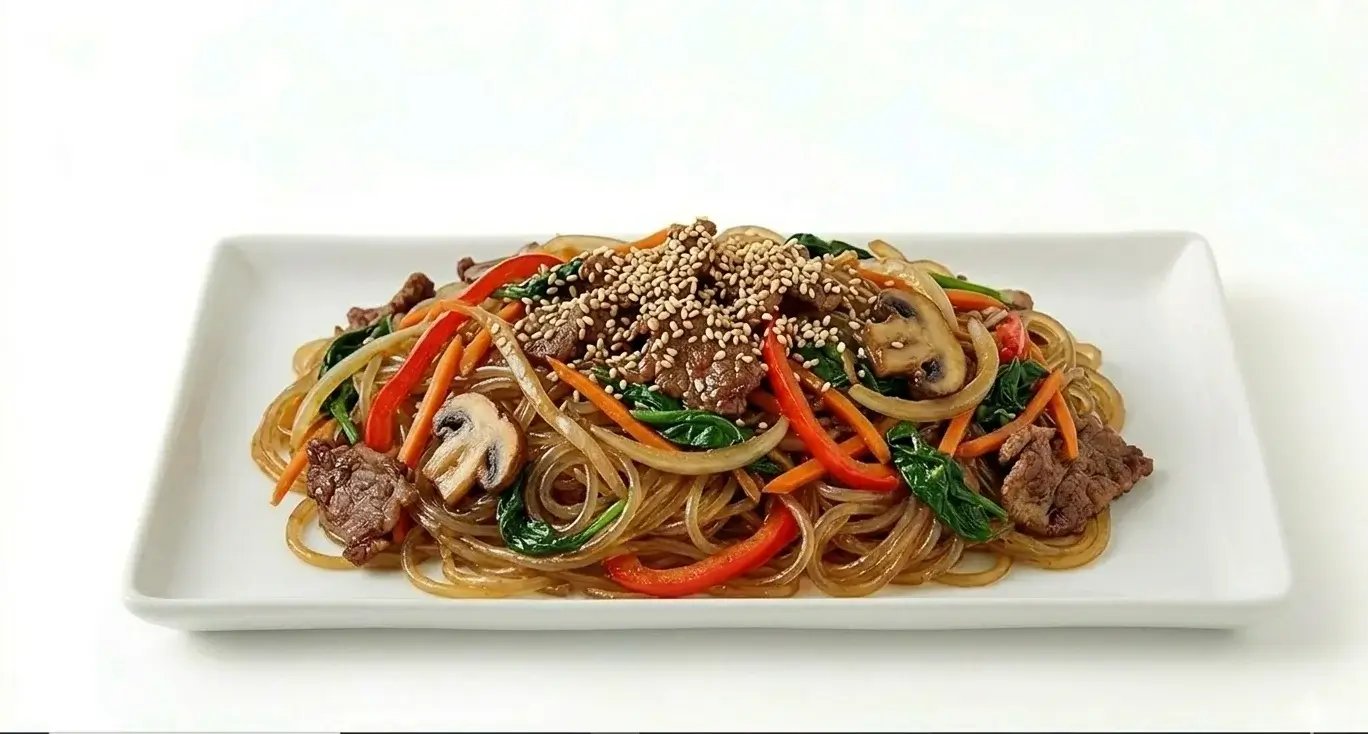
Japchae contains sweet potato glass noodles stir-fried with vegetables, bulgogi, Soy Garlic sauce and sesame seeds.
Official Japchae Nutrition
| Configuration | Serving (oz) | Calories | Protein | Sodium | Sodium DV |
|---|---|---|---|---|---|
| Japchae | 15.3 | 887 | 22 g | 2,322 mg | 101% |
One published Japchae order contains 2,322 mg sodium, slightly above the FDA's 2,300 mg Daily Value.
Although glass noodles are commonly made with sweet potato starch, the prepared dish includes sauce and other ingredients. Confirm allergens directly with the restaurant.
Bonchon Udon Noodle Soup
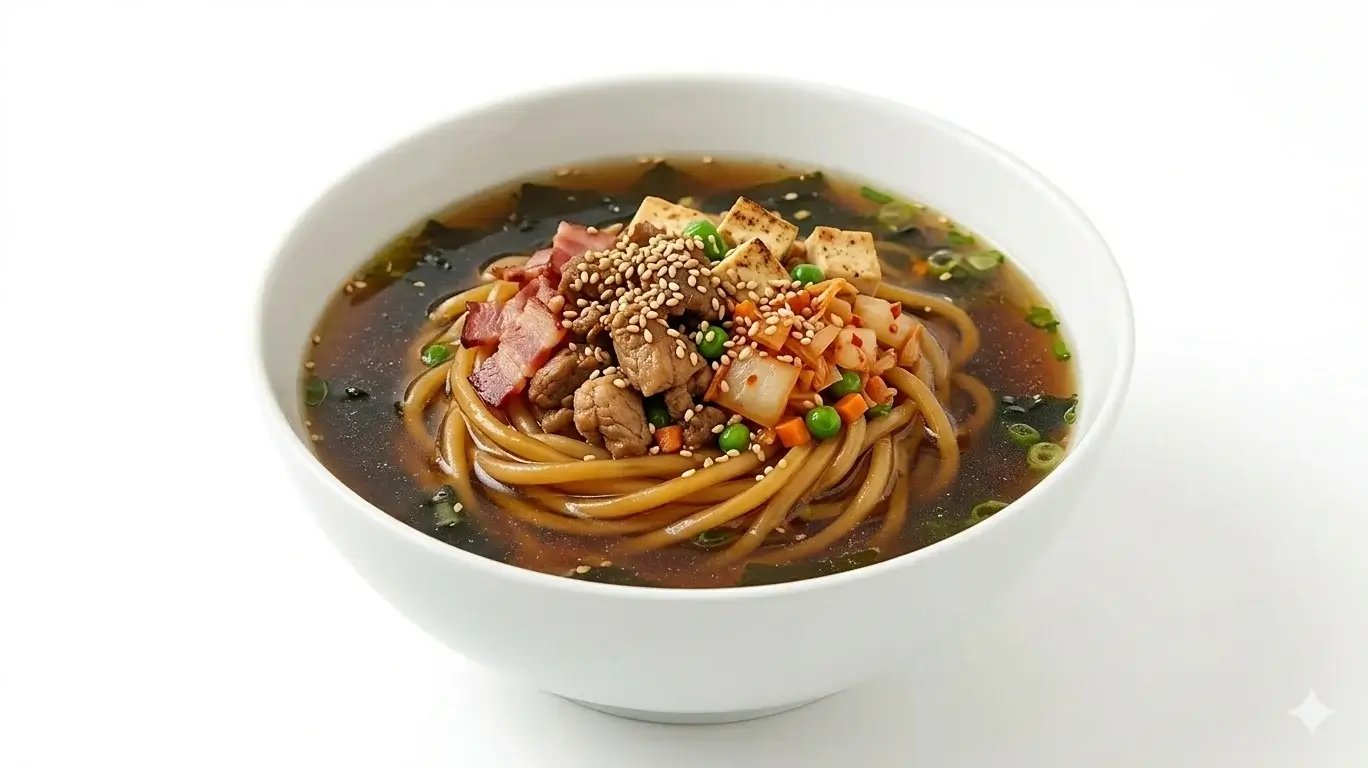
Bonchon Udon Noodle Soup features wheat noodles in broth with mushrooms and scallions. The nutrition document includes plain, egg, bulgogi and seafood variations.
Official Udon Nutrition by Topping
| Configuration | Serving (oz) | Calories | Protein | Sodium | Sodium DV |
|---|---|---|---|---|---|
| Plain | 33.3 | 480 | 24 g | 4,300 mg | 187% |
| With egg | 35 | 580 | 32 g | 4,323 mg | 188% |
| With bulgogi | 36 | 683 | 39 g | 4,565 mg | 198% |
| With seafood | 36 | 595 | 44 g | 4,326 mg | 188% |
Source: official 2026 Bonchon nutrition PDF. Values describe the listed full orders. Sodium percentages use the FDA 2,300 mg Daily Value.
Highest sodium among these main dishes: The four published Udon Noodle Soup configurations contain 4,300–4,565 mg sodium, approximately 187%–198% of the FDA's Daily Value.
The nutrition document does not identify how much sodium comes from each ingredient.
Plain Udon has the fewest calories among the eight base main dishes compared here at 480, but it is not the lowest-sodium choice.
Bonchon Tteokbokki
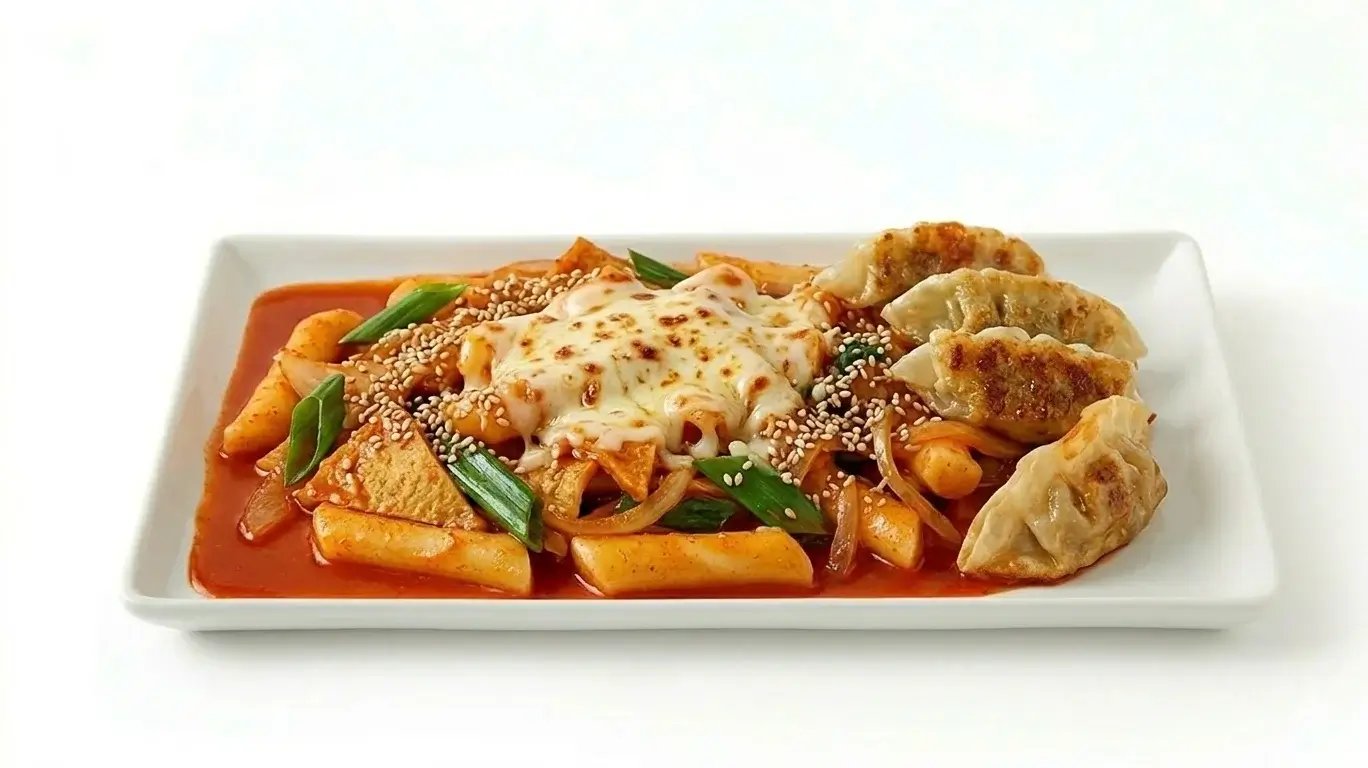
Tteokbokki features Korean rice cakes, fish cakes, onions, scallions, mozzarella and vegetable potstickers.
Official Tteokbokki Nutrition
| Configuration | Serving (oz) | Calories | Protein | Sodium | Sodium DV |
|---|---|---|---|---|---|
| Tteokbokki | 30.4 | 980 | 32 g | 2,780 mg | 121% |
The published Tteokbokki order contains 2,780 mg sodium, approximately 121% of the Daily Value. The dish has a spicy sauce, but perceived heat varies from person to person.
Bonchon Chicken Katsu
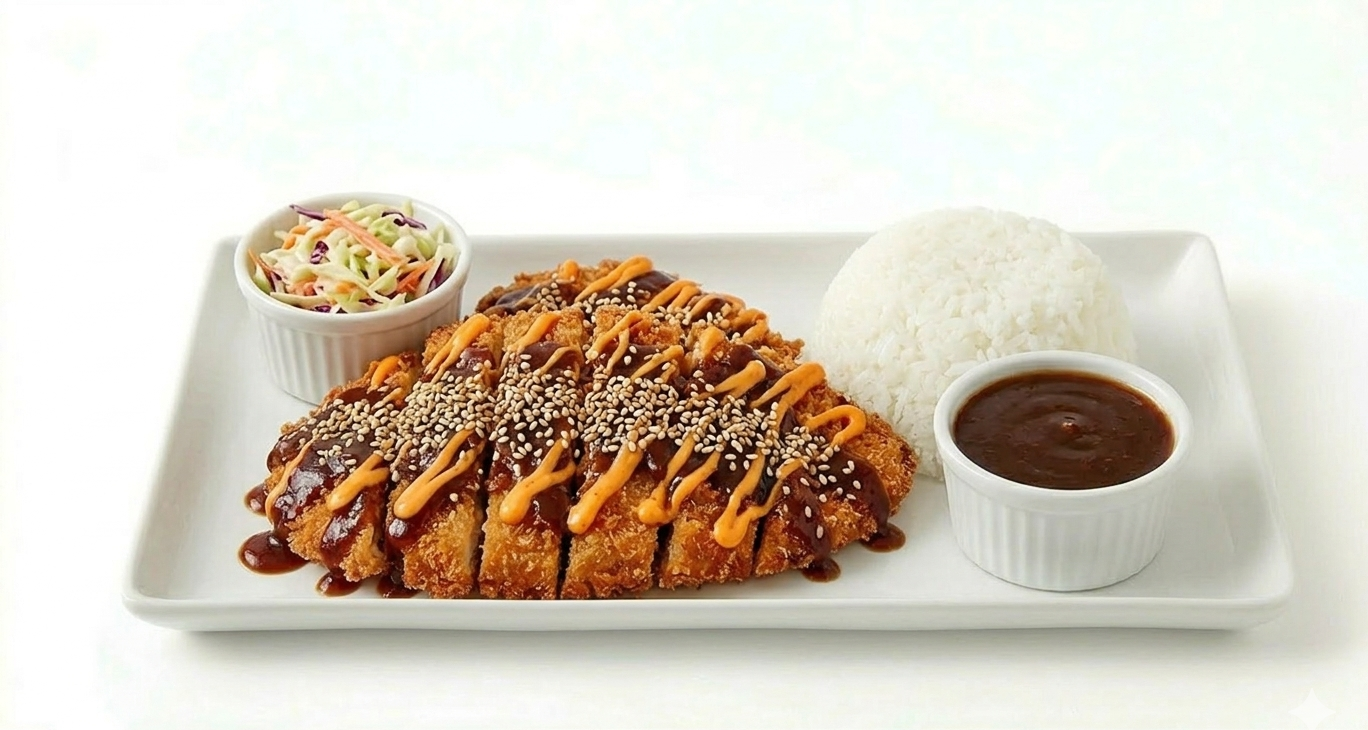
Chicken Katsu is a breaded fried chicken breast served with steamed rice, katsu sauce, spicy mayo, scallions and coleslaw.
Official Chicken Katsu Nutrition
| Configuration | Serving (oz) | Calories | Protein | Sodium | Sodium DV |
|---|---|---|---|---|---|
| Chicken Katsu | 20.6 | 1,319 | 65 g | 672 mg | 29% |
Among the eight base main dishes compared here, Chicken Katsu has the lowest published sodium: 672 mg, or 29% DV.
It also provides approximately 4.9 g protein per 100 calories, the highest ratio among the selected orders in this guide.
The official menu describes a fried chicken cutlet. It does not establish that this is the only Bonchon chicken product prepared without the signature double-frying method.
Bonchon Bulgogi
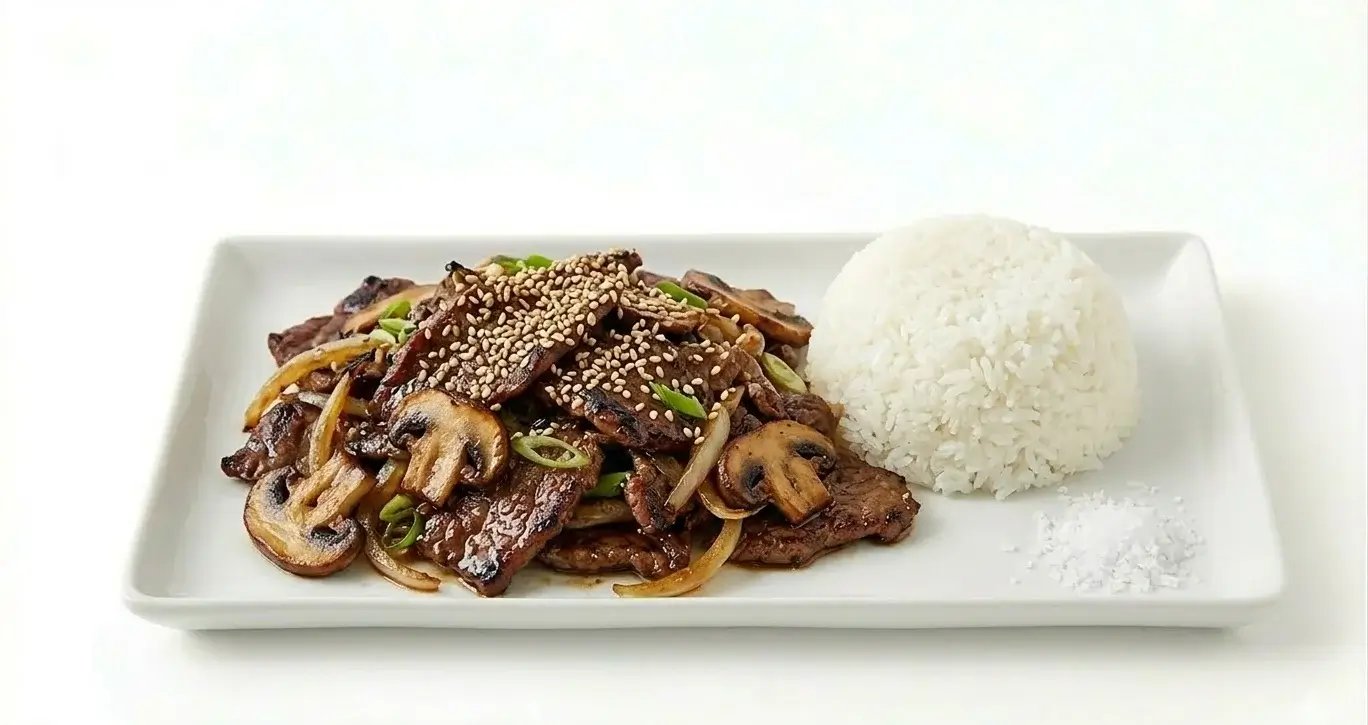
Bulgogi features marinated beef with mushrooms, onions, scallions and sesame seeds, served with rice.
Official Bulgogi Nutrition
| Configuration | Serving (oz) | Calories | Protein | Sodium | Sodium DV |
|---|---|---|---|---|---|
| Bulgogi | 32.2 | 1,940 | 79 g | 1,620 mg | 70% |
The published Bulgogi configuration is a substantial 32.2 oz order with 1,940 calories and 79 g protein. Its 1,620 mg sodium equals approximately 70% of the Daily Value.
Its calories should not be compared with a smaller serving as though both orders weighed the same.
Bonchon Buldak
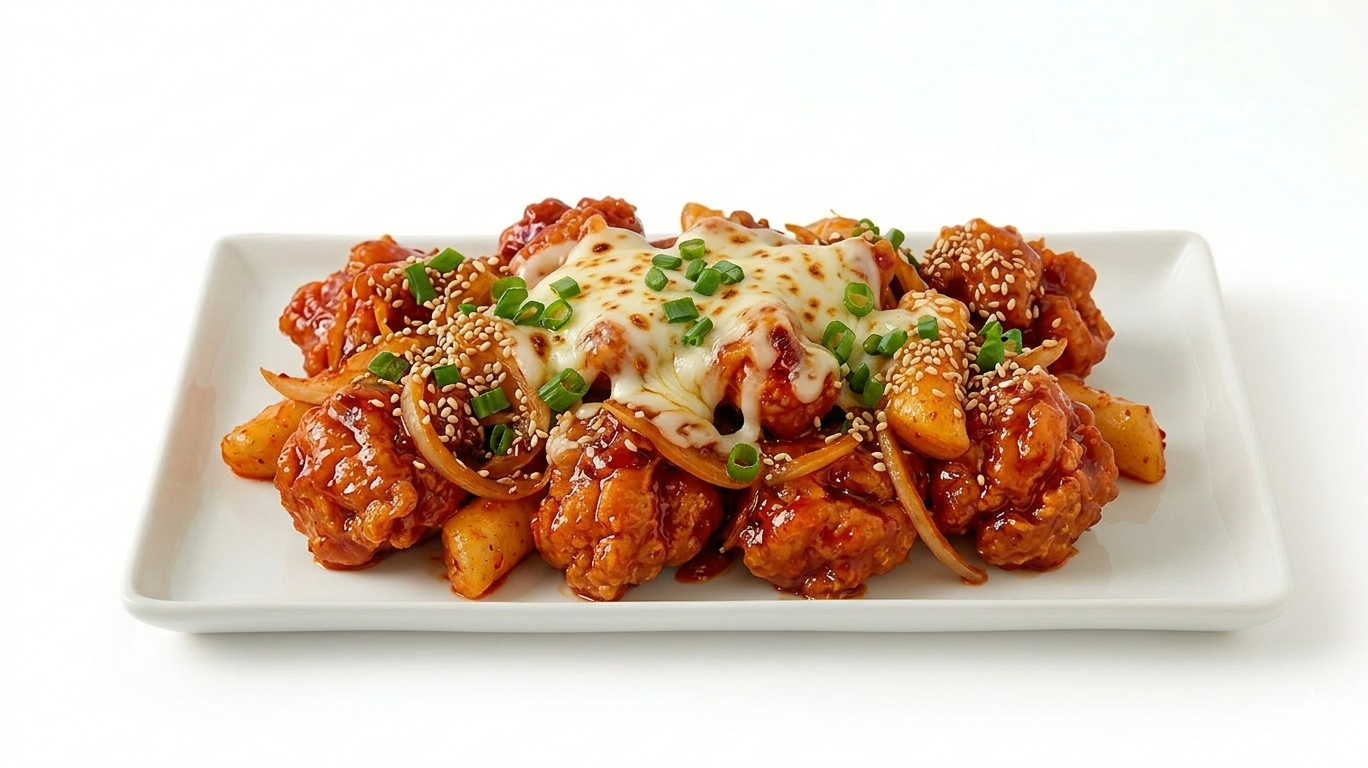
Buldak is a spicy stir-fried chicken dish with rice cakes, onions, hot pepper sauce, scallions, sesame seeds and mozzarella, served with rice.
Official Buldak Nutrition
| Configuration | Serving (oz) | Calories | Protein | Sodium | Sodium DV |
|---|---|---|---|---|---|
| Buldak | 46 | 2,610 | 99 g | 3,780 mg | 164% |
Buldak has the highest published calories and absolute protein among these eight base orders: 2,610 calories and 99 g protein. Its 46 oz serving is also the largest in this comparison.
Its 3,780 mg sodium is higher than most of the listed main dishes, but lower than the published Udon configurations.
What if two people split Buldak? Dividing the published nutrition totals into two equal portions would give each person approximately:
1,305 calories, 49.5 g protein and 1,890 mg sodium (about 82% DV).
This is a mathematical example, not an official Bonchon serving recommendation. The reviewed menu does not specify a recommended number of servings.
Bonchon House Fried Rice
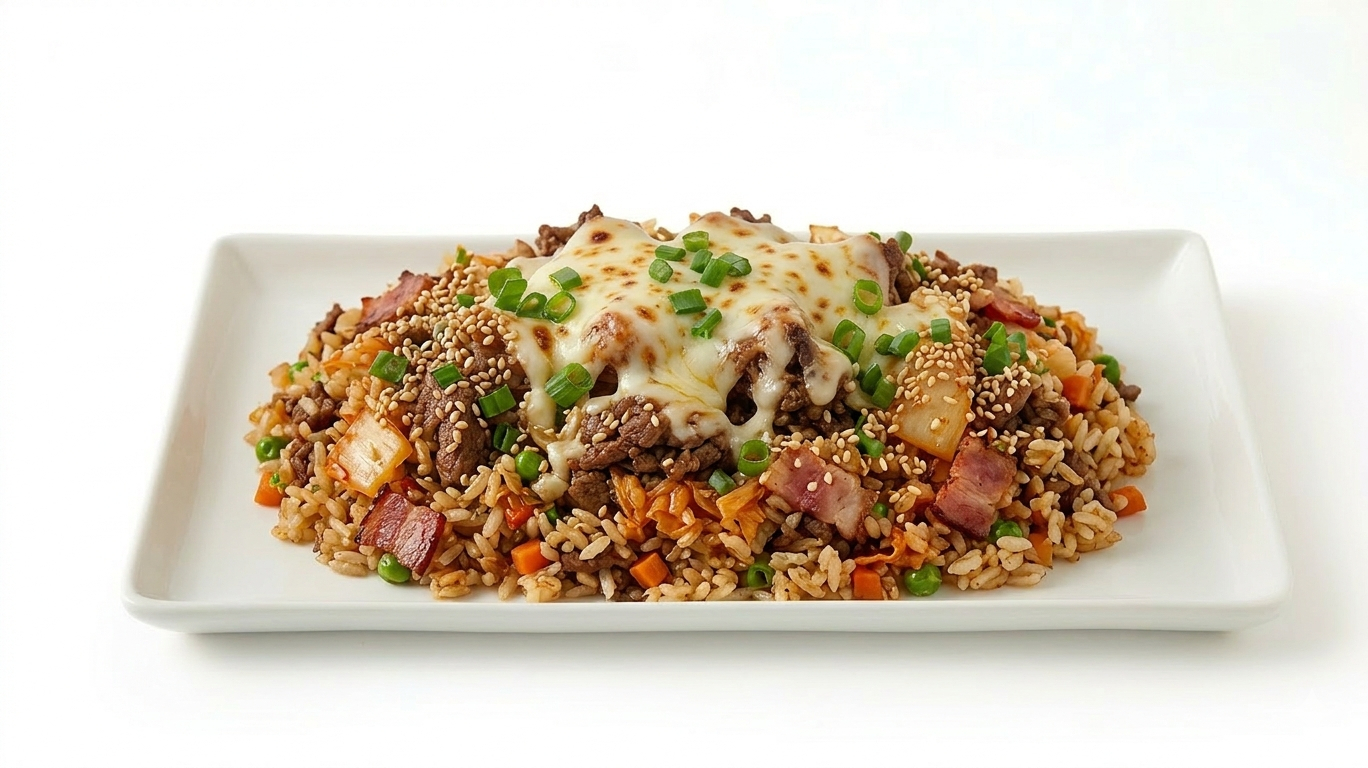
House Fried Rice contains egg, red bell pepper, onions, Soy Garlic sauce and sesame seeds. The nutrition document includes plain and several protein variations.
Official House Fried Rice Nutrition
| Configuration | Serving (oz) | Calories | Protein | Sodium | Sodium DV |
|---|---|---|---|---|---|
| Plain | 21.5 | 1,168 | 24 g | 2,126 mg | 92% |
| With chicken | 24.5 | 1,321 | 45 g | 2,242 mg | 97% |
| With bulgogi | 24.5 | 1,379 | 39 g | 2,533 mg | 110% |
| With kimchi pork belly | 21.5 | 977 | 22 g | 1,988 mg | 86% |
| With seafood | 25.7 | 1,323 | 44 g | 3,022 mg | 131% |
| With kimchi bacon | 25.5 | 1,480 | 44 g | 3,369 mg | 146% |
The nutrition document identifies kimchi pork belly and kimchi bacon as separate configurations. Figures refer to their respective published orders.
Protein selection changes both calories and sodium. The lowest-calorie listed version is kimchi pork belly at 977 calories, not plain at 1,168.
Kimchi bacon has the highest sodium among the listed fried-rice variations: 3,369 mg, or 146% DV. The bulgogi and seafood versions also exceed 100% DV.
How to Choose a Bonchon Main Dish
The following suggestions use the specific published configurations compared in this guide. They are not personal dietary recommendations.
| If you want... | Consider | Published comparison |
|---|---|---|
| The lowest sodium | Chicken Katsu | 672 mg, 29% DV |
| The most protein in one listed order | Buldak | 99 g, in a 46 oz serving |
| The most protein per calorie | Chicken Katsu | 4.9 g per 100 calories |
| The fewest calories | Plain Udon Noodle Soup | 480 calories, but 4,300 mg sodium |
| A rice bowl with topping choices | Bibimbap | 14–34 g protein across listed variations |
| A marinated beef dish | Bulgogi | 79 g protein, 1,620 mg sodium |
| Glass noodles | Japchae | 887 calories, 2,322 mg sodium |
| Spicy rice cakes | Tteokbokki | 980 calories, 2,780 mg sodium |
Allergy and dietary reminder: Soy-based sauces, wheat noodles, breading, seafood, sesame and shared preparation areas can matter for allergies and dietary restrictions.
Do not assume a dish is gluten-free, halal-certified or safe for a specific allergy. Confirm ingredients, cross-contact and any applicable certification with the selected restaurant.
Frequently Asked Questions
Which Bonchon main dish has the most sodium?
Among the eight dishes and their published variations reviewed here, Udon Noodle Soup has the highest sodium. The plain version contains 4,300 mg, and the bulgogi version contains 4,565 mg.
Which Bonchon main dish has the least sodium?
Chicken Katsu has the lowest listed sodium among the eight base dishes at 672 mg, approximately 29% of the FDA Daily Value.
How many calories are in Bonchon Buldak?
The official nutrition document lists 2,610 calories, 99 g protein and 3,780 mg sodium for a 46 oz order.
How many calories are in Bonchon Bibimbap?
Plain Bibimbap lists 785 calories. The published variations range from 785 to 970 calories depending on topping.
Does tofu increase the protein in Bonchon Bibimbap?
Not in the published rows used here. Plain and tofu Bibimbap both list 14 g protein. The tofu version has 15 additional calories.
How many calories are in Bonchon Japchae?
The listed Japchae order contains 887 calories, 22 g protein and 2,322 mg sodium.
How much protein is in Bonchon Bulgogi?
The published Bulgogi order contains 79 g protein, 1,940 calories and 1,620 mg sodium.
Is Bonchon Buldak a meal for two?
The reviewed menu does not specify a recommended number of servings. The nutrition document lists a 46 oz order. Dividing it into two equal portions is a mathematical example, not an official Bonchon serving recommendation.
Which Bonchon main dish has the fewest calories?
Among the eight base configurations compared here, plain Udon Noodle Soup has the fewest calories at 480. It also has the highest sodium.
Does Bonchon have nationwide main-dish prices?
This guide does not verify a single nationwide price list. Select your restaurant and ordering channel for current prices.
Are Bonchon main dishes gluten-free or halal?
Do not assume either status. Ask the restaurant about current ingredients, preparation, cross-contact and certification.
Sources and Editorial Method
Editorial review: October 2026. This is independent desk research, not a firsthand restaurant review.
Dish descriptions: Bonchon Official US Menu . Used for dish descriptions and menu categories.
Nutrition and serving weights: Bonchon Nutrition Facts (2026 PDF) . Calories, protein, sodium and serving weights are taken from identified published nutrition rows.
Calculated comparisons: Sodium %DV uses 2,300 mg as the Daily Value. Protein per 100 calories and comparisons between published orders are calculated from the nutrition figures.
FDA reference: Sodium in Your Diet .
Updates: Check Bonchon's official nutrition download page for newer documents. Restaurant availability, ingredients and serving configurations may change.
Price verification: No local main-dish checkout, in-store price board or exact restaurant-specific main-dish price was independently verified for this update.
Explore the menu: Korean Fried Chicken · Starters · Sides · Desserts · Full Menu
More resources: Calorie Calculator · Official Bonchon Menu · Official Nutrition Information
BonchonMenuPrice.com is an independent informational website and is not affiliated with or endorsed by Bonchon. Menu information and nutrition may change. All trademarks belong to their respective owners.