
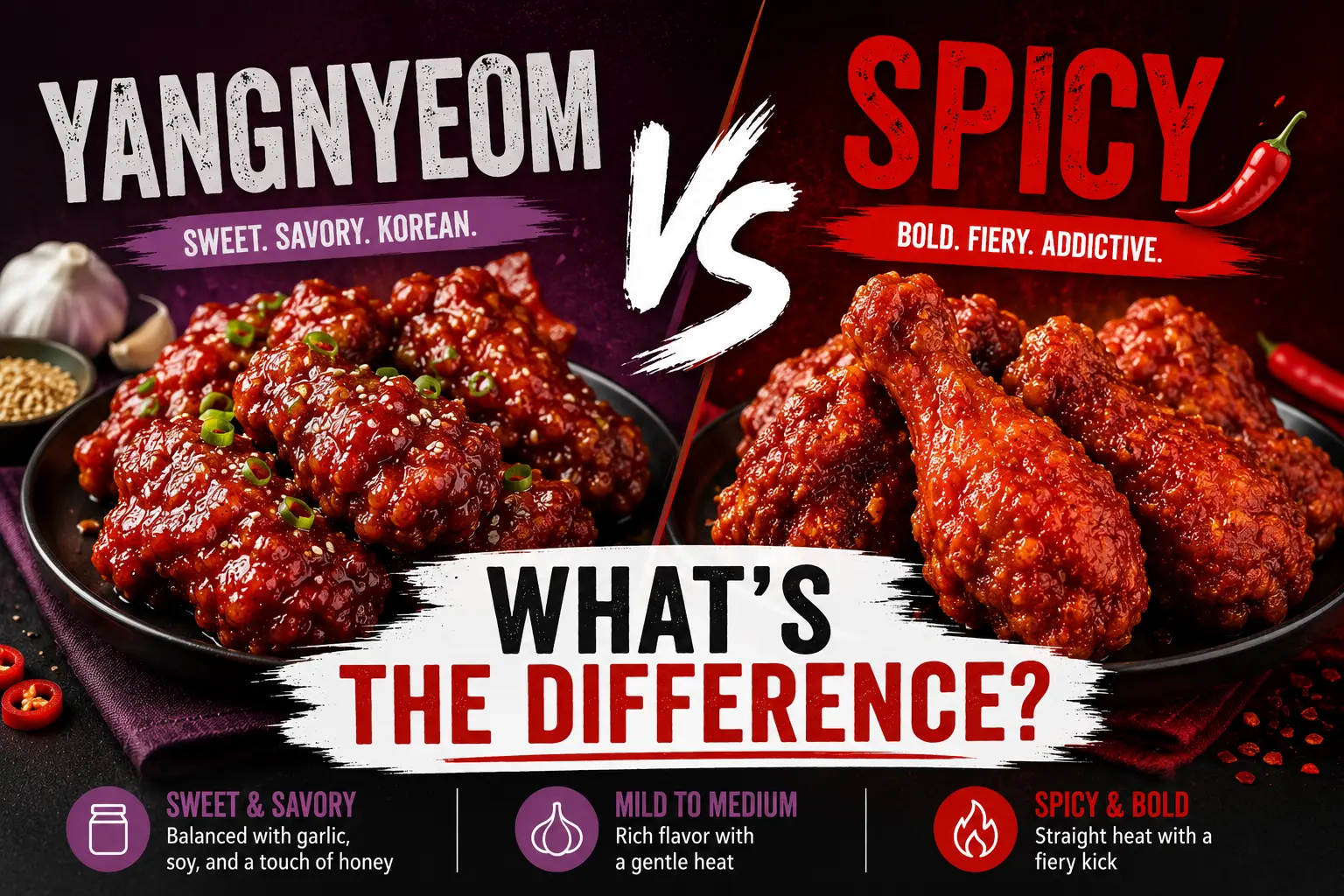
Most people walking into Bonchon already understand Soy Garlic versus Spicy. The trickier question — and one a lot of fans get wrong is Yangnyeom versus Spicy. On paper they sound similar: both bring heat, both have a savory-sweet edge. But order one expecting the other and you will notice immediately. They are two genuinely different experiences, and this guide explains exactly how.
The Short Answer : Bonchon Yangnyeom vs Spicy
- Yangnyeom is the sweeter, more traditional Korean fried chicken sauce sweet heat with garlic and a tangy edge. The sweetness comes first; the warmth follows gently.
- Spicy is the hotter, more savory option a slow-building chili heat sitting on a savory base, with far less sweetness.
If you want classic Korean sweet-and-spicy, go Yangnyeom. If you want real heat with a savory backbone, go Spicy.
What Yangnyeom Actually Is?
Yangnyeom is not a Bonchon invention it is the traditional Korean fried chicken sauce, the one that defined the category in Korea long before any chain reached the U.S. The name itself refers to the seasoned-sauce style. Bonchon’s version delivers what fans describe with the brand’s own playful “yang-yummmm” tag: a mix of sweet and Korean-pepper spice, with hints of garlic and soy underneath.
The defining trait is balance tilted toward sweetness. You taste the sweet-savory glaze up front, then a mild, rounded warmth arrives behind it. It is the kind of heat that even people who claim they “do not do spicy” can usually handle, because the sugar softens the edge.
With Yangnyeom, the sweetness hits before anything else closer to a glazed, sticky-sweet wing than the savory heat of Bonchon’s straight Spicy. The warmth only shows up a beat later, and it never builds the way Spicy does by the third or fourth piece.
What Spicy Actually Is?
Bonchon’s Spicy is a different animal. Built on Korean chili (gochugaru-based), it is savory and warming rather than sweet, and the heat builds. You will taste the familiar savory base, then feel the warmth spread across the back of your throat about ten seconds after the bite. Eat several pieces in a row and your nose may start to run it sits comfortably at medium-high.
There is sweetness in the background, but it plays a supporting role. Spicy is for people who want the chili to be the headline, not the garnish.
| Yangnyeom | Spicy | |
| Sweetness | High — sweet-forward | Low — savory-forward |
| Heat | Mild–medium, gentle | Medium–high, builds |
| Character | Traditional Korean sweet-spicy | Savory chili warmth |
| First bite | Sweet, then warm | Savory, then heat builds |
| Best for | Sweet-heat lovers, cautious spice eaters | People who want real heat |
Which One Should You Order?
Order Yangnyeom if you want the authentic Korean fried chicken flavor, you like sweet-and-spicy together, or you find Bonchon’s straight Spicy a little too hot. It is also a great middle path between Soy Garlic and Spicy more interesting than Soy Garlic, less aggressive than Spicy.
Order Spicy if you genuinely like heat, you want a savory rather than sweet profile, and you are not feeding anyone spice-shy.
Can’t decide? Yangnyeom on one half and Spicy on the other makes a fascinating Half & Half — the sweet glaze and the building heat play off each other beautifully, and you get to taste the full range in one order.
One thing worth knowing: Yangnyeom has sometimes been offered as a limited or rotating flavor rather than a year-round staple. If you have your heart set on it, it is worth confirming availability at your branch before you go.
Our verdict: Yangnyeom when you want the traditional sweet-and-spicy experience, Spicy when you actually want heat. One caveat Yangnyeom is not always on the board at every location, so confirm it is available before you get your hopes up.
Frequently Asked Questions
Is Yangnyeom spicier than Bonchon’s Spicy sauce?
No. Yangnyeom is sweeter and milder, with a gentle warmth. Bonchon’s Spicy sauce is hotter, more savory, and builds more heat.
What does Yangnyeom taste like?
It is the traditional Korean fried chicken sauce sweet and spicy together, with garlic and soy notes and a tangy edge. The sweetness leads, and the heat follows softly.
Is Yangnyeom always available at Bonchon?
Not always. It has sometimes been offered as a limited or rotating flavor, so it is worth checking with your local branch before ordering.
Can I order Yangnyeom and Spicy as Half & Half?
Usually yes, where both are available. The contrast between Yangnyeom’s sweetness and Spicy’s building heat makes for a great combination.
Which is better for someone who doesn’t like much heat?
Yangnyeom. Its sweetness softens the spice, making it more approachable than Bonchon’s straight Spicy.
Related: Bonchon Soy Garlic vs Spicy , Bonchon Sauces Ranked , What Is Double-Fried Chicken ?

Alex Kim is the pen name of the lead writer and editor at BonchonMenuPrice.com. Every guide is research-based — prices and nutrition details are compiled from official Bonchon menus and cross-checked across multiple US locations, with regular updates whenever the menu changes.
4 thoughts on “Bonchon Yangnyeom vs Spicy: What’s the Difference?”