
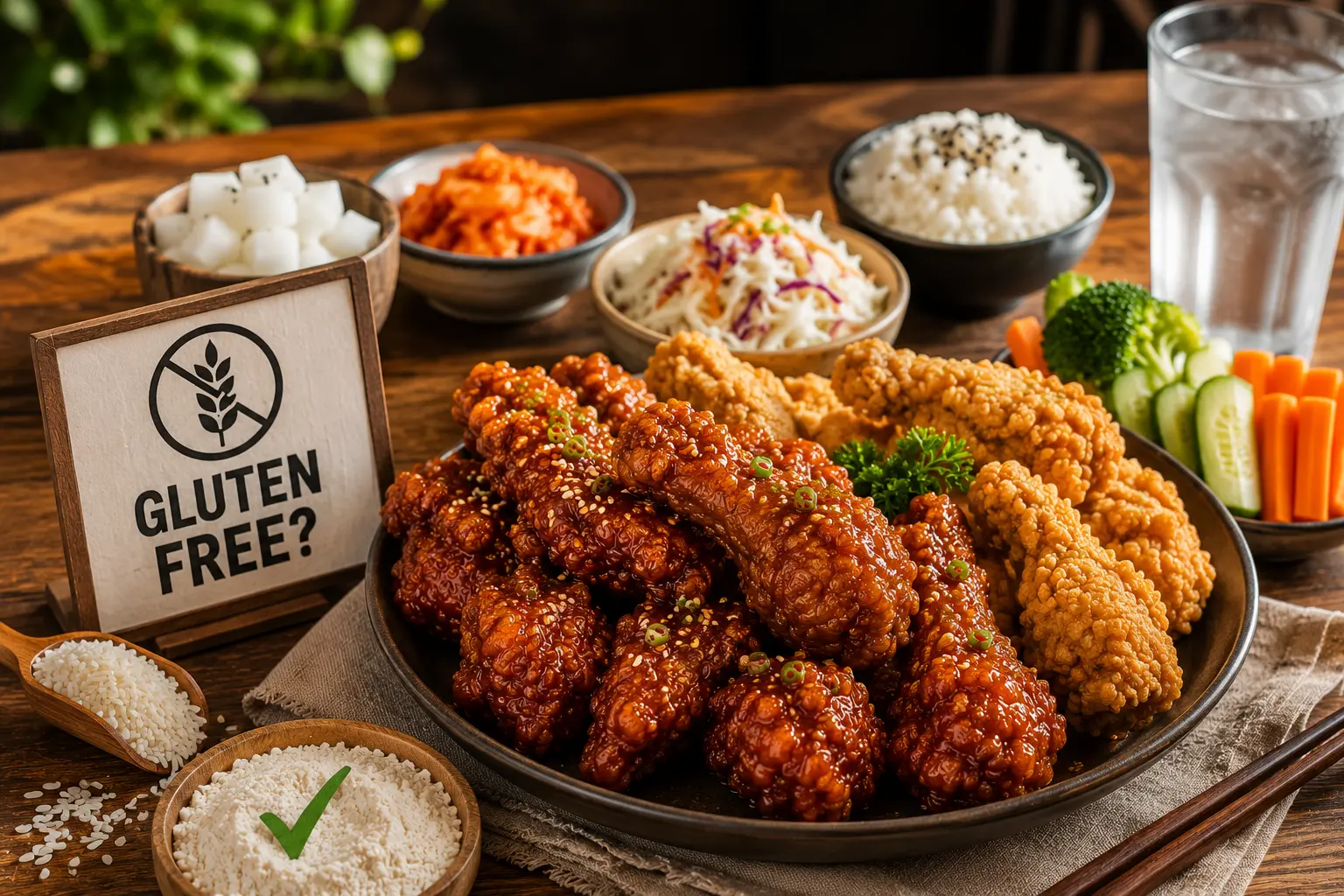
The short answer: Do not assume Bonchon is gluten-free. Its signature Korean fried chicken is hand-battered, and several other menu items contain breading, wheat noodles or sauces that require allergen verification. Bonchon does not provide enough assurance in the materials reviewed here to recommend its food as safe for someone with celiac disease.
Some simpler sides, including steamed rice, pickled radish and edamame, may be worth asking about. However, an item without wheat marked on an allergen chart is not automatically gluten-free.
This guide explains what to avoid, which items to investigate and what to ask your local Bonchon restaurant before ordering.
Is Bonchon Chicken Gluten-Free?
Do not treat Bonchon’s signature fried chicken as gluten-free.
Bonchon describes its Korean fried chicken as hand-battered, double-fried and brushed with sauce. The menu includes wings, drumsticks, strips, boneless chicken and combinations.
Breading is an important gluten concern. Sauce ingredients and preparation methods introduce additional questions.
There is no verified gluten-free chicken preparation or dedicated gluten-free cooking process established by the official information reviewed for this article.
That means ordering a different sauce or asking for sauce on the side should not be treated as a way to make the chicken gluten-free.
Explore the Bonchon Korean Fried Chicken menu for available cuts and flavors.
Bonchon Gluten-Free Guide: Menu Items Compared
The table below is a practical screening guide, not a certified gluten-free menu.
| Menu item | Gluten-related concern | Recommendation |
|---|---|---|
| Wings and drumsticks | Hand-battered chicken; sauce ingredients also matter | Do not assume gluten-free |
| Boneless chicken and strips | Breading and preparation | Do not assume gluten-free |
| Chicken Katsu | Fried, breaded chicken | Avoid unless verified otherwise |
| Udon Noodle Soup | Official menu identifies wheat noodles | Contains a clear wheat ingredient |
| Onion Rings | Battered preparation | Do not assume gluten-free |
| Korean Donuts | Dough and frying preparation | Do not assume gluten-free |
| Steamed Rice | Simple rice-based side | Ask about additions and handling |
| Pickled Radish | Pickled vegetable side | Confirm ingredients and utensils |
| Edamame | Steamed soybeans; contains soy | Confirm seasoning and handling |
| Kimchi | Fermented cabbage with recipe-dependent ingredients | Verify the current recipe |
| Coleslaw | Dressing ingredients and handling | Verify before ordering |
| Korean Cucumber Salad | Seasonings and preparation | Verify before ordering |
| Korean Street Corn | Mayo, cheese and seasonings | Verify all ingredients |
How to read this table: “Ask” or “verify” does not mean the item is safe. It means the restaurant must provide enough reliable information before you make a decision.
The official menu confirms the chicken preparation, wheat noodles in udon and descriptions of several sides. <Link url=”https://www.bonchon.com/menu” title=”Bonchon Official Menu”/>
Which Bonchon Sides Might Be Worth Asking About?
Steamed Rice
Bonchon lists steamed white rice as a side.
Rice is naturally gluten-free, but that does not establish whether a restaurant’s prepared serving is free from gluten-containing additions or cross-contact.
Ask whether the rice is cooked plain and whether separate utensils can be used.
Pickled Radish
Bonchon describes this side as cubed daikon radish in a sweet, sour brine.
The official menu also says Korean fried chicken is served with complimentary pickled radish or coleslaw.
Ask the restaurant to confirm the current ingredients and whether the radish can be served without contact with breaded chicken.
Edamame
Bonchon’s edamame is described as steamed soybeans sprinkled with salt.
This is a simpler menu item to investigate, but it contains soy, a major allergen. It should not be labeled certified gluten-free without supporting information.
Ask about seasonings, preparation surfaces and serving utensils.
Kimchi and Korean Cucumber Salad
These vegetable sides may look suitable for gluten avoidance, but seasonings and sauces need to be checked.
Do not assume traditional recipes are identical across restaurants or that the absence of visible breading means the food is gluten-free.
Coleslaw and Korean Street Corn
These sides include dressings or toppings with multiple ingredients.
Ask for current ingredient and allergen information rather than relying on the dish name.
For more options, see our Bonchon Sides Menu.
Are Bonchon Sauces Gluten-Free?
Do not assume any Bonchon signature sauce is gluten-free without checking its current ingredients.
Bonchon’s menu lists Soy Garlic, Spicy, Korean BBQ, Yangnyeom and Classic Crunch as chicken flavor choices.
Traditional soy sauce often contains wheat, but the exact formulation of every Bonchon sauce cannot be established solely from the sauce’s name.
A sauce may also contain other gluten-containing ingredients, and gluten-free ingredients can still be exposed to cross-contact during preparation.
Before ordering, ask the restaurant whether the specific sauce contains wheat, barley, rye, malt or other gluten-containing ingredients.
Important: Removing the sauce would not automatically make battered chicken suitable for someone avoiding gluten.
Is Bonchon Bibimbap Gluten-Free?
Bonchon’s bibimbap is a rice-and-vegetable dish offered with different topping choices at participating locations.
Rice and vegetables alone do not guarantee a gluten-free finished dish. Sauce, marinades, protein preparation and shared utensils can all affect suitability.
If you are considering bibimbap, ask:
- Does the sauce contain wheat or another gluten source?
- Are any selected proteins marinated or breaded?
- Can the restaurant verify all ingredients in the complete order?
- Can it prevent contact with gluten-containing foods during preparation?
Do not assume ordering bibimbap without sauce is sufficient for celiac safety.
See our Bonchon Main Dishes Guide.
What About Fries and Other Fried Sides?
French fries are made from potatoes, but restaurant fries cannot be judged by the potato ingredient alone.
Seasoning, coatings and frying practices matter. The same applies to seasoned fries, sweet potato waffle fries and fried zucchini.
A shared fryer may introduce gluten cross-contact if gluten-containing foods are cooked in the same oil.
We have not independently verified the fryer arrangement at every Bonchon location. Therefore, ask your specific restaurant rather than relying on a blanket claim that all locations follow identical procedures.
For people with celiac disease, uncertain fryer practices are a serious reason not to assume a fried side is safe.
Can Someone With Celiac Disease Eat at Bonchon?
The information reviewed for this guide is not sufficient to identify a reliably celiac-safe Bonchon meal.
Celiac disease requires strict gluten avoidance. Cross-contact can matter even when gluten-containing ingredients are not intentionally added to a dish.
Restaurant preparation may involve shared workspaces, utensils, storage areas or cooking equipment.
A restaurant employee’s verbal reassurance is useful only if it is supported by reliable ingredient information and clear preparation procedures.
If staff cannot confirm ingredients and cross-contact controls, the safer decision is not to order that item.
For general information about the condition, see the NHS guide to coeliac disease.
Questions to Ask Before Ordering
Instead of asking only “Do you have anything gluten-free?”, use specific questions:
- Can you show me the current ingredient or allergen information for this exact item?
- Does its sauce, seasoning or marinade contain wheat, barley, rye or malt?
- Is the food prepared using utensils or surfaces shared with battered chicken?
- If the item is fried, is the oil shared with breaded foods?
- Can your kitchen follow a documented procedure to reduce gluten cross-contact?
- If you cannot verify an ingredient or preparation step, can you tell me clearly?
These questions help you make an informed decision. They do not guarantee that a meal will be gluten-free.
A Practical Bonchon Order for Someone Avoiding Gluten
If you are avoiding gluten by preference rather than managing celiac disease, you might begin by asking about a combination of steamed rice, edamame and pickled radish.
However, this is a list of items to investigate, not a confirmed gluten-free meal.
We have intentionally excluded a fixed price, calorie total and protein total because those figures must match the current portions and verified nutrition entries.
If you need strict gluten avoidance, do not order based on this suggestion unless the restaurant can adequately verify both ingredients and preparation.
For general nutrition comparisons, visit our Bonchon Nutrition Facts Guide.
Frequently Asked Questions
Is Bonchon gluten-free?
Bonchon should not be considered a gluten-free restaurant based on the information reviewed here. Its signature chicken is battered, and several menu items contain or may contain gluten-related ingredients.
Are Bonchon wings gluten-free?
Do not assume so. Bonchon’s wings are part of its hand-battered, double-fried chicken range. Sauce ingredients and preparation also require verification.
Are Bonchon Soy Garlic and Spicy sauces gluten-free?
Their names do not establish gluten-free status. Ask Bonchon for the current ingredient and allergen information for each sauce.
Is Bonchon steamed rice gluten-free?
Plain rice is naturally gluten-free, but the finished restaurant serving needs ingredient and cross-contact confirmation.
Is Bonchon edamame gluten-free?
Edamame is made from soybeans, but the restaurant’s seasoning and preparation must be checked. It also contains soy, a major allergen.
Are Bonchon french fries gluten-free?
Do not assume so. Confirm any coating or seasoning ingredients and whether the fryer is shared with gluten-containing foods.
Is Bonchon bibimbap gluten-free without sauce?
Not necessarily. Protein marinades, other ingredients and preparation methods must also be checked.
Is Bonchon safe for celiac disease?
This guide cannot identify a confirmed celiac-safe meal at Bonchon. Ask for current allergen information and documented cross-contact procedures. If these cannot be verified, do not assume an item is safe.
Are Bonchon Korean donuts gluten-free?
Do not assume so. Their dough ingredients and frying practices must be checked. They should not be recommended as a gluten-free dessert without verification.
Does “no wheat listed” mean gluten-free?
No. Wheat is not the only source of gluten, and an allergen chart does not necessarily establish protection against cross-contact.
Sources and Research Method
Last reviewed: October 21, 2026
Our primary references are:
- Bonchon Official Menu — current menu descriptions and preparation details.
- Bonchon Official Nutritional Information — the company’s published nutrition and allergen resources.
We distinguish three types of information:
Confirmed menu descriptions: Information explicitly published by Bonchon, such as hand-battered chicken, wheat noodles in udon and the descriptions of its sides.
Ingredients requiring verification: Sauces, marinades, dressings and other preparations whose complete current ingredients have not been established here.
Cross-contact uncertainty: Preparation risks that cannot be resolved from menu descriptions alone and require confirmation from the restaurant.
For a wider overview of food allergens, read our Bonchon Allergen Guide. You can also explore our Vegetarian and Vegan Options Guide or Is Bonchon Healthy?.
Independent website disclaimer: BonchonMenuPrice.com is an unofficial informational website and is not affiliated with or endorsed by Bonchon. This article does not certify any Bonchon menu item as gluten-free or safe for celiac disease. Ingredients, menus and preparation procedures may change. Always contact your restaurant for current allergen information. This content is informational and is not medical advice.

BonchonMenuPrice.com is an independent food information site. Our team compiles
prices and nutrition data from Bonchon’s official menus, cross-checks them across
multiple US locations, and updates pages whenever the menu changes.
3 thoughts on “Is Bonchon Gluten Free? What You Can Actually Eat (2026)”