
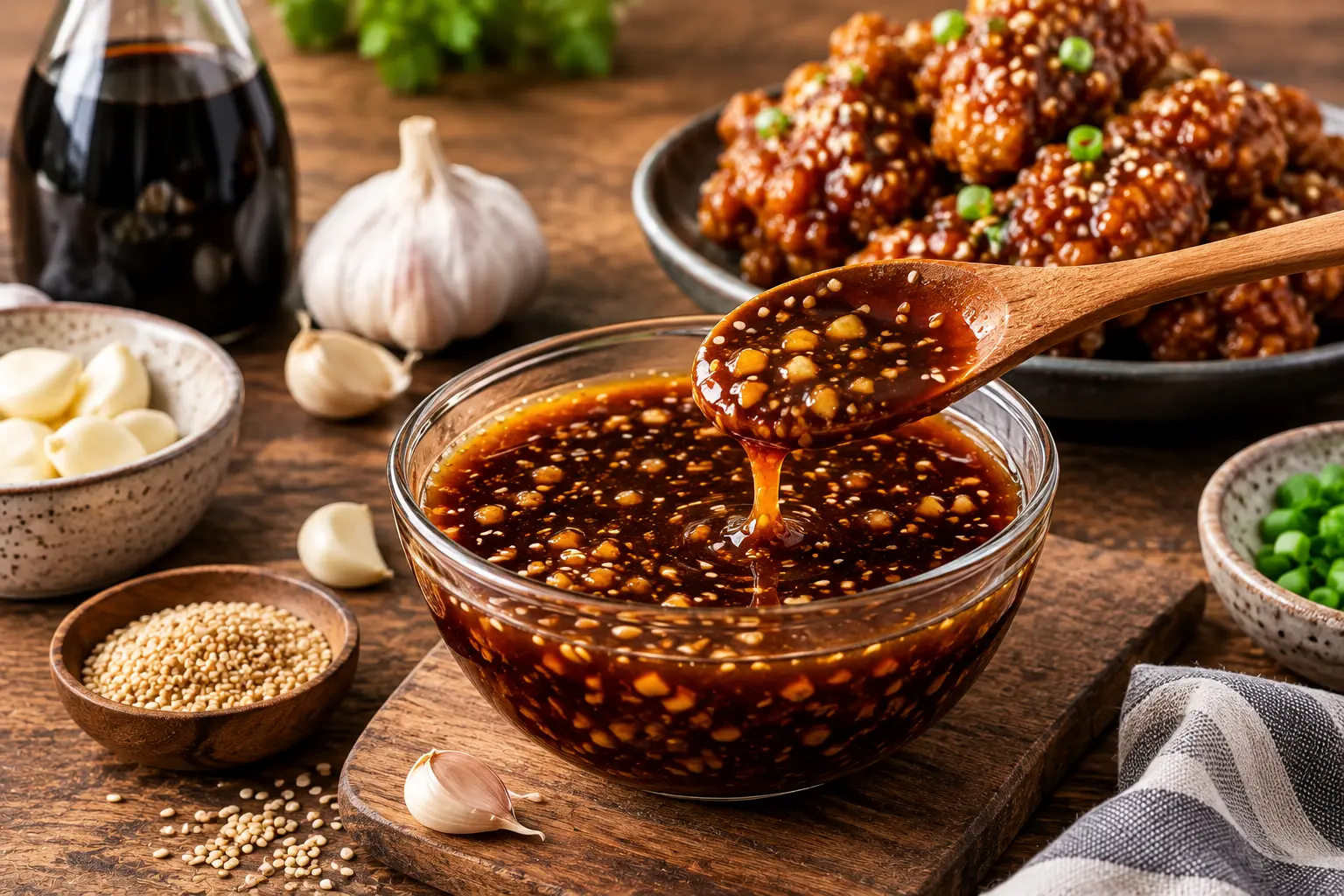
Bonchon has never published its actual soy garlic recipe, so this is an independent approximation built around the same technique: double-fried chicken hand-brushed with a soy, garlic and mirin glaze. It won’t be an exact match, but it gets close, and it’s the same method our sauce comparisons and ordering guides are built on.
This is an independent copycat recipe, not Bonchon’s actual formula. For the restaurant version, see our wings and sauces ranked pages. If you want to compare this glaze against Bonchon’s spicier options, see Soy Garlic vs Spicy and Yangnyeom.
Why the Technique Matters More Than the Sauce
Soy garlic glaze on its own isn’t unusual. Soy sauce, garlic and something sweet is a common base across Korean and Japanese cooking. What makes Bonchon’s version distinct is the chicken underneath it: double-fried, then hand-brushed with sauce rather than tossed. That’s covered in full on our homepage guide, and it’s worth replicating at home if you want the texture to hold up, because a good glaze on soggy chicken just tastes like a good glaze on soggy chicken.
Ingredients
For the Chicken
| Ingredient | Amount |
|---|---|
| Chicken wings (split into flats and drumettes) | 2 lbs |
| Salt | 1/2 tsp |
| Black pepper | 1/4 tsp |
| Cornstarch or potato starch, for dredging | 1.5–2 cups |
| Neutral oil, for frying | Enough for 2 inches in a pot |
For the Soy Garlic Glaze
| Ingredient | Amount |
|---|---|
| Soy sauce | 1/3 cup |
| Mirin (Korean or Japanese rice wine) | 1/4 cup |
| Brown sugar | 2 tbsp |
| Garlic, finely minced | 5 cloves |
| Onion, finely minced | 1/4 cup |
| Fresh ginger, grated | 1 tsp |
| Cornstarch + 1 tbsp water (slurry) | 1 tsp cornstarch |
| Neutral oil, for the pan | 1 tsp |
| Toasted sesame seeds, for garnish | To taste |
| Sliced scallions, for garnish | To taste |
No mirin on hand? One tablespoon of rice vinegar mixed with a half-teaspoon of sugar works as a substitute, though the glaze will taste slightly sharper and less rounded.
Instructions
Fry the Chicken
- Dry and season. Pat the wings completely dry with paper towels. This matters more than any other step for getting a crisp coating. Season with salt and pepper.
- Dredge. Toss the wings in cornstarch until fully and evenly coated. Shake off any excess.
- First fry. Heat oil to 325°F. Fry the wings in batches for 8–9 minutes, until cooked through but pale gold. Remove and rest on a wire rack for 5 minutes. This lets residual moisture escape before the second fry.
- Second fry. Raise the oil to 375°F. Fry the wings again for 3–4 minutes, until deep golden and audibly crisp. This second fry is what gives double-fried chicken its shatter texture and is not optional if you want the Bonchon-style crunch.
Food safety note: use a food thermometer to confirm the chicken has reached an internal temperature of 165°F, per USDA guidance on safe minimum internal temperatures. Color and crunch are not reliable indicators of doneness on their own.
Make the Glaze
- Sauté the aromatics. Heat 1 tsp oil in a small saucepan over medium heat. Add the garlic, onion and ginger, and cook for about 1 minute until fragrant. Don’t let the garlic brown, or it turns bitter.
- Add the liquids. Pour in the soy sauce, mirin and brown sugar. Bring to a gentle simmer, stirring until the sugar dissolves.
- Thicken. Stir the cornstarch and water together into a slurry, then add it to the pan. Simmer for 1–2 minutes until the glaze thickens enough to coat the back of a spoon.
Glaze and Serve
- Brush, don’t dunk. Bonchon hand-brushes sauce onto fried chicken rather than tossing it in a bowl, which keeps the coating from soaking up excess glaze and going soft. A pastry brush works well for this at home.
- Garnish. Sprinkle with toasted sesame seeds and sliced scallions.
- Serve immediately. The crunch is at its best in the first few minutes after glazing, since this isn’t a dish that holds well before serving.
Skip the second fry and you’ll notice it immediately. Chicken fried once and glazed will soften within a few minutes. The second fry is what lets the coating survive contact with a wet glaze at all.
Variations
Want it spicier?
Add 1–2 tsp of gochujang (Korean chili paste) to the glaze along with the soy sauce. For reference on how Bonchon’s own hotter options compare, see our Yangnyeom breakdown.
Want it milder?
Cut the garlic to 3 cloves and skip the ginger. The result leans closer to a straight sweet soy glaze.
Want to try half and half?
Split a batch of wings in two and make a second small batch of glaze with gochujang added, so you get both versions from one fry. See our half-and-half combinations guide for pairing ideas.
Don’t want to deep fry?
An air fryer at 400°F for 20–22 minutes, flipping halfway, gets close to the same result with less oil, though the shatter-crunch of true double-frying is hard to fully replicate without a fryer.
Storage and Reheating
Store leftover glazed chicken in the fridge for up to 2 days. It will lose crispness once glazed and refrigerated, and that’s expected, not a sign anything went wrong. To bring it back, use the same method we recommend for restaurant leftovers in our Bonchon reheating guide: air fryer at 375°F for 5–7 minutes, not the microwave.
The glaze itself keeps separately in the fridge for about a week in a sealed container, so it’s worth doubling the sauce batch and frying fresh chicken another day rather than storing the two together.
Common Questions
Is this Bonchon’s actual soy garlic recipe?
No. Bonchon has never published its proprietary recipe. This is an independent approximation built around the same double-fry technique and a common soy-garlic glaze profile. It gets close but won’t be an exact match.
Can I make the sauce ahead of time?
Yes. The glaze keeps in the fridge for about a week in a sealed container. Reheat gently on the stove before brushing it onto freshly fried chicken.
Why does my chicken go soft after glazing?
Usually a skipped or rushed second fry. The second fry renders out extra moisture and sets the coating hard enough to resist the glaze’s liquid. Brushing rather than tossing also helps.
Can I use chicken drumsticks or breast instead of wings?
Yes, the technique works the same way. Drumsticks need a longer first fry (about 12–14 minutes) since the piece is bigger; see our Bonchon drumsticks page for how the restaurant version compares by cut.
What can I substitute for mirin?
One tablespoon of rice vinegar mixed with a half-teaspoon of sugar per tablespoon of mirin needed. The flavor will be slightly sharper and less rounded than the real thing.
Compare to the real thing: Bonchon Wings · All 5 sauces ranked · Soy Garlic vs Spicy
Explore more: Korean Fried Chicken menu · Ordering guide · Reheating guide
Full menu: back to the BonchonMenuPrice.com homepage.

BonchonMenuPrice.com is an independent food information site. Our team compiles
prices and nutrition data from Bonchon’s official menus, cross-checks them across
multiple US locations, and updates pages whenever the menu changes.
2 thoughts on “Bonchon Soy Garlic Sauce Copycat Recipe (Double-Fried at Home)”