
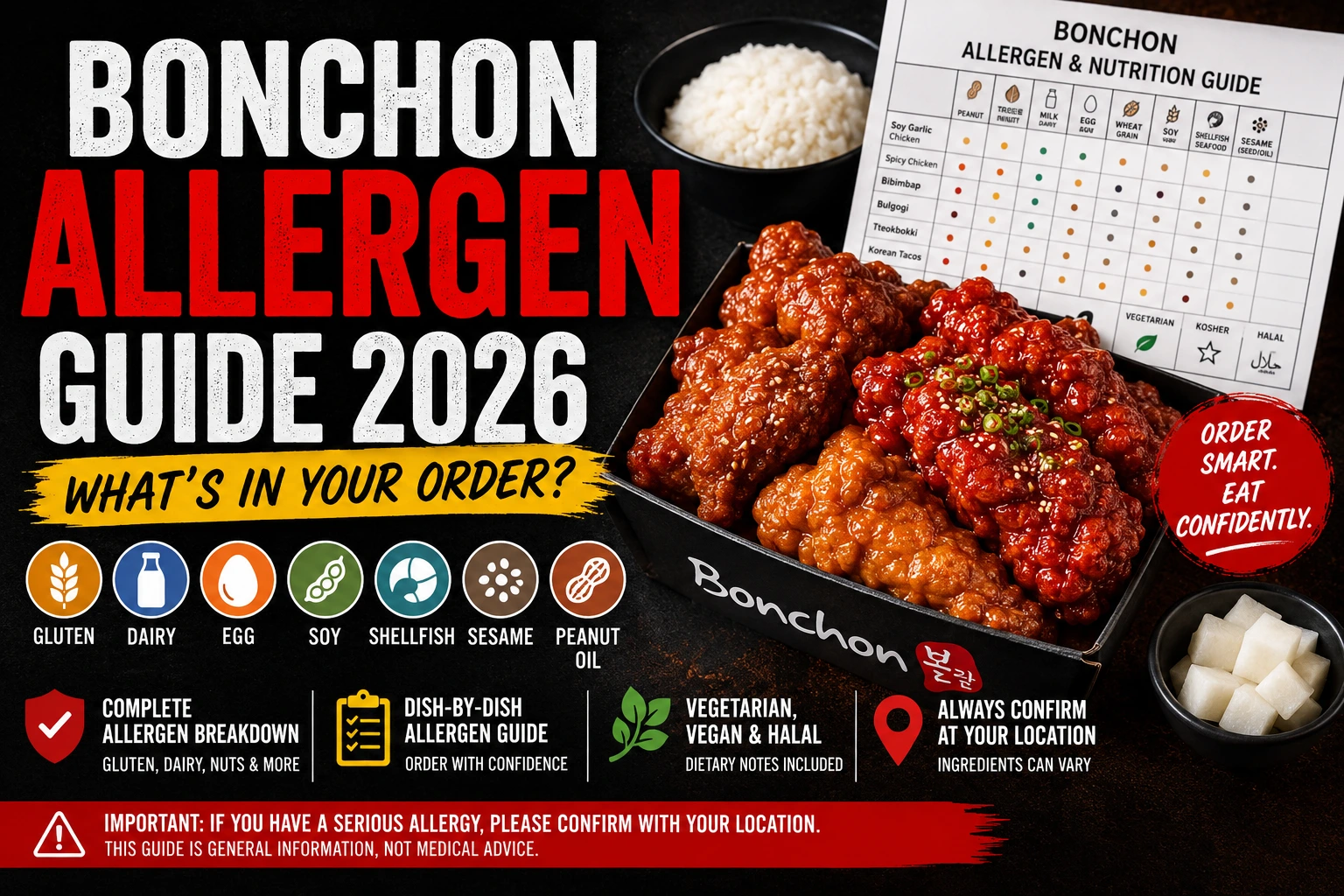
If you have a food allergy, checking the menu before visiting Bonchon is an important first step. Bonchon’s Korean fried chicken, sauces, appetizers, Korean dishes and sides may contain ingredients associated with common food allergens, including wheat, milk, eggs, soy, sesame, fish and shellfish.
The most important thing to know: Bonchon should not be treated as an allergen-free restaurant, and a menu description alone cannot establish whether a particular dish is safe for someone with a food allergy.
This Bonchon allergen guide explains which menu items deserve extra attention, how to interpret ingredient information and what to ask your local restaurant before ordering.
We use Bonchon’s published menu descriptions and official nutritional information resources as starting points. However, ingredient formulations, suppliers, restaurant menus and preparation practices can change. Always confirm current details for your exact order.
Important Food Allergy Warning
This article is an informational guide, not a certified allergen-free menu or a substitute for Bonchon’s official allergen information.
Food allergens may appear in obvious ingredients, such as cheese or shrimp, or less obvious components, such as sauces, marinades, seasonings, dressings and breading.
Cross-contact is another concern. Even when an allergen is not intentionally added to a dish, food may come into contact with it during storage, cooking, preparation or serving.
If you have a severe food allergy, contact your Bonchon location directly and explain your specific restrictions. Ask for current ingredient information and details about how the kitchen handles allergen cross-contact.
If the restaurant cannot reliably verify the ingredients or preparation procedures, do not assume the food is safe.
Does Bonchon Have an Allergen Menu or Chart?
Bonchon provides an official nutritional information resource that customers can consult when researching menu items.
Official resource: Bonchon Nutritional Information
Check the most current information available for the exact dish, sauce, side and serving size you intend to order.
When reviewing an allergen chart or menu description, distinguish between these three situations:
- Identified allergen: An ingredient or allergen is explicitly identified in the information available.
- Allergen not listed: The information reviewed does not identify the allergen. This does not prove that the allergen is absent.
- Requires confirmation: Complete ingredients, supplier details or cross-contact procedures cannot be established from the information available.
An ingredient list or allergen chart may not explain everything about shared cooking equipment or preparation surfaces. Restaurant-level confirmation is particularly important for people with serious allergies.
Bonchon Allergen Quick-Reference Table
The following table highlights ingredients identifiable from published menu descriptions and additional allergen questions worth investigating.
How to use this table: The “What to verify” column lists potential concerns that require confirmation. It does not mean that every allergen mentioned is present in that dish.
This is not a certified allergen-free menu and should not replace Bonchon’s current official item-specific information.
| Bonchon Menu Item | Identifiable Ingredient or Concern | What to Verify Before Ordering |
|---|---|---|
| Korean Fried Chicken | Hand-battered chicken and sauces | Wheat, soy, egg, milk, sesame and preparation practices |
| Bibimbap | Scrambled egg in the described preparation | Sauce, toppings, sesame, soy and wheat |
| Bulgogi | Sesame seeds in the menu description | Marinade ingredients, soy and wheat |
| Japchae | Soy Garlic sauce and sesame seeds | Complete sauce ingredients and wheat |
| Tteokbokki | Mozzarella cheese and fish cakes | Milk, fish, wheat and other ingredients |
| Chicken Katsu | Breaded chicken, spicy mayo and katsu sauce | Wheat, egg, soy, milk and frying practices |
| Udon Noodle Soup | Wheat noodles | Soy, egg and selected toppings |
| House Fried Rice | Egg, Soy Garlic sauce and sesame seeds | Wheat, soy and selected proteins |
| Shrimp Shumai | Shrimp | Shellfish, wheat, egg and dipping sauces |
| Takoyaki | Octopus and mayonnaise-based topping | Seafood, egg, wheat and sauces |
| Bao Buns | Bun, sauces and fillings | Wheat, egg, soy and other filling ingredients |
| Bulgogi Fries | Mozzarella cheese and spicy mayo | Milk, egg, soy, wheat and fryer use |
| Korean Tacos | Flour tortillas and creamy sauces | Wheat, egg, milk, soy and fillings |
| Edamame | Soybeans | Soy, seasoning and cross-contact |
| Steamed Rice | Rice-based side | Added ingredients and preparation practices |
| Pickled Radish | Pickled vegetable preparation | Brine ingredients and handling |
| Kimchi | Fermented vegetable preparation | Fish, shellfish, soy and seasonings |
| Coleslaw | Creamy dressing | Egg, milk and complete dressing ingredients |
| Korean Street Corn | Mozzarella and mayonnaise-based topping | Milk, egg and seasonings |
| Korean Donuts | Donut and sweet cream dipping sauce | Wheat, milk, egg and frying practices |
Menu availability and recipes can differ by location. A dish’s appearance or name is not enough to establish its allergen status.
For descriptions of current menu categories, visit our Bonchon Korean Fried Chicken Menu, Main Dishes and Sides Menu.
Is Bonchon Gluten-Free?
Do not assume Bonchon is gluten-free.
Bonchon’s signature Korean fried chicken is described as hand-battered and double-fried. Its coating, sauces and preparation methods require careful consideration for anyone avoiding gluten.
Other menu items with obvious wheat-related concerns include:
- Udon Noodle Soup: The noodles are described as wheat noodles.
- Korean Tacos: The published description includes flour tortillas.
- Chicken Katsu: The breaded preparation requires ingredient verification.
- Bao Buns and dumplings: Dough-based components require wheat and gluten checks.
- Other battered or fried foods: Coatings and shared fryer practices may matter.
Sauces and marinades can also contain gluten-related ingredients. Traditional soy sauce often contains wheat, but the exact formulation of a Bonchon sauce must be checked rather than inferred from its name.
What about rice, edamame and pickled radish?
These sides may be useful starting points for ingredient questions because their main ingredients are naturally gluten-free.
However, they are not confirmed gluten-free restaurant servings. Added ingredients, seasonings, preparation surfaces and shared utensils can affect their suitability.
For someone with celiac disease, the restaurant must be able to provide sufficiently reliable ingredient and cross-contact information before a meal can be considered suitable.
Read our detailed Is Bonchon Gluten-Free? Guide for more information.
Dairy Allergens at Bonchon
Milk and dairy ingredients appear in several Bonchon menu descriptions.
Menu items with dairy-related ingredients
Bulgogi Fries
Bonchon’s published description includes mozzarella cheese. Anyone with a milk allergy should verify the complete dish, including sauces and toppings.
Tteokbokki
The described preparation includes mozzarella cheese. Fish cakes and other ingredients introduce additional allergen questions.
Korean Street Corn
This side is described with mozzarella and a mayonnaise-based topping. Check the full recipe and seasonings.
Seasoned Fries and Seasoned Fried Zucchini
Published descriptions include Parmesan cheese. Fryer use and other ingredients should also be checked.
Signature Sesame Salad
The menu description includes mozzarella cheese and sesame dressing.
Korean Donuts
The dessert is served with a sweet cream dipping sauce. The donut itself also requires ingredient verification.
Is Bonchon fried chicken dairy-free?
Do not assume that every chicken cut, coating or sauce is dairy-free.
Even when milk is not obvious in a menu description, it may be present in a prepared ingredient. Obtain the current allergen information for the exact chicken variation and sauce.
Milk allergy and lactose intolerance are different. Someone who can tolerate a small amount of lactose may still need to avoid milk proteins because of an allergy.
Egg Allergens at Bonchon
Egg may appear as a visible ingredient or as part of sauces, dressings and prepared components.
Bonchon items that deserve attention
Bibimbap: The published menu description includes scrambled egg.
House Fried Rice: Egg is identified in the described preparation.
Udon Noodle Soup: Fried egg is an available topping.
Korean Street Corn: The menu describes a mayonnaise-based topping.
Takoyaki: Served with Kewpie Mayo in the published description.
Korean Tacos: Described with spicy mayo and buttermilk ranch.
Chicken Katsu: Served with spicy mayo.
Coleslaw: Includes a creamy dressing whose exact ingredients should be confirmed.
Mayonnaise commonly contains egg, but a sauce’s actual ingredient formulation must be verified.
Removing a visible egg or mayonnaise topping does not automatically make a complete dish egg-free. Other components and shared preparation equipment may still matter.
Soy Allergens at Bonchon
Soy is an important allergen to investigate across Bonchon’s menu.
Edamame
Edamame consists of soybeans and is a clear soy-allergen concern.
If you have a soy allergy, do not treat edamame as a safe vegetable side.
Soy Garlic Sauce
Bonchon offers Soy Garlic as a signature chicken flavor.
The sauce’s name raises an obvious soy-related question, but its exact ingredient formulation and allergen declaration should be checked using Bonchon’s current official information.
Other possible soy sources
Soy-related ingredients may also appear in:
- Marinades used for meat or vegetables.
- Fried rice sauces.
- Japchae sauces.
- Dipping sauces and dressings.
- Other prepared menu components.
A dish without the word “soy” in its name is not necessarily soy-free.
If you have a soy allergy, ask about the complete dish, including sauces, seasonings and the oil used in preparation.
Sesame Allergens at Bonchon
Sesame appears in several published Bonchon menu descriptions.
Examples include:
Bulgogi: Described with sesame seeds.
Japchae: Includes sesame seeds.
House Fried Rice: Includes sesame seeds.
Buldak: Includes sesame seeds in the described preparation.
Signature Sesame Salad: Includes sesame dressing.
Sesame may also appear in oils, sauces, marinades and garnishes.
If you have a sesame allergy, ask whether sesame seeds, sesame oil or sesame-containing sauces are used in your exact dish.
Also ask about shared utensils and preparation surfaces.
Removing visible sesame seeds is not enough to establish that a dish is sesame-free if other components contain sesame or cross-contact cannot be controlled.
Peanuts, Tree Nuts and Frying Oil
Peanut and tree-nut allergies require careful ingredient and preparation checks.
A food does not need to visibly contain nuts to raise questions about supplier ingredients, sauces or cross-contact.
Does Bonchon use peanut oil?
This guide cannot establish a single nationwide frying-oil policy for every Bonchon restaurant.
The type of oil used may need to be confirmed directly with the specific location.
It is also important to distinguish between:
- Peanut ingredients intentionally included in a recipe.
- Refined or unrefined peanut oil used in cooking.
- Supplier cross-contact warnings.
- Shared restaurant equipment.
Important distinction: Highly refined peanut oil and unrefined peanut oil can have different allergy implications. Their suitability depends on the actual product and the individual’s medical guidance.
A supplier warning about a manufacturing facility does not, by itself, establish that a Bonchon restaurant uses peanut oil in its fryers.
Questions to ask about nuts
- What frying oil is currently used at this restaurant?
- Does the exact menu item contain peanuts or tree nuts?
- Do any sauces, seasonings or supplier products have nut-related warnings?
- Is equipment shared with foods containing peanuts or tree nuts?
- Can the restaurant provide reliable information about its preparation procedures?
For serious nut allergies, follow the guidance of your allergy specialist rather than relying on general assumptions about restaurant cooking oils.
Fish and Shellfish Allergens at Bonchon
Seafood-related allergens may be present in appetizers, Korean dishes, broths and sauces.
Shrimp Shumai
Shrimp Shumai contains shrimp, which is a crustacean shellfish.
Anyone with a shrimp or crustacean shellfish allergy should treat this as an important allergen concern.
Takoyaki
Takoyaki contains octopus.
Octopus is a mollusk, while shrimp is a crustacean. These are different seafood categories, and people with seafood allergies should clarify which ingredients they must avoid.
Tteokbokki
The published menu description includes fish cakes.
Ask about the fish cakes, sauce, broth and any additional seafood-derived ingredients.
Kimchi
Kimchi recipes can include fish-derived or other seafood ingredients, depending on the formulation.
Do not assume Bonchon’s kimchi is fish-free, shellfish-free, vegetarian or vegan without confirming the current recipe.
Hidden seafood ingredients
Seafood-derived ingredients may also be found in:
- Broths.
- Fish sauce.
- Marinades.
- Fermented seasonings.
- Dipping sauces.
- Prepared toppings.
Visual inspection is not a reliable way to determine whether a dish contains seafood allergens.
Are Bonchon Vegetarian or Vegan Foods Allergen-Free?
No. Vegetarian and vegan labels do not mean a dish is free from major food allergens.
For example, edamame is plant-based but contains soy.
Vegetable dishes may also include wheat, sesame, soy or other allergens through dressings and seasonings.
Similarly, a dish without meat may still contain milk, eggs, fish sauce or other animal-derived ingredients.
People following a vegetarian or vegan diet should verify ingredients for their dietary preferences. People with food allergies must also consider cross-contact and allergen-specific risks.
Explore our Bonchon Vegetarian and Vegan Options Guide for more details.
Halal, Kosher and Food Allergies: What’s the Difference?
Halal and kosher requirements are different from food-allergy requirements.
A dish may meet a particular religious dietary requirement while still containing wheat, milk, eggs, soy, sesame or other allergens.
Likewise, an allergen chart cannot establish halal or kosher certification.
If halal or kosher compliance matters to you, ask your local Bonchon restaurant about ingredient sourcing, preparation practices and any applicable certification.
Read our Is Bonchon Halal? Guide.
Cross-Contact at Bonchon: Why Ingredients Are Only Part of the Picture
Cross-contact occurs when an allergen unintentionally comes into contact with another food.
Potential sources in a restaurant kitchen include:
- Shared fryers and cooking oil.
- Common cutting boards or work surfaces.
- Shared tongs, scoops and serving utensils.
- Gloves used while handling multiple foods.
- Sauces or toppings handled near other ingredients.
- Equipment used to prepare several menu items.
These are general restaurant cross-contact risks. They do not establish that every Bonchon location uses identical equipment or procedures.
A dish with no identified allergen in its listed ingredients may still be unsuitable for someone with a serious allergy if cross-contact cannot be adequately controlled.
For severe allergies: Ask whether the restaurant has a documented procedure for handling your allergen. If staff cannot reliably confirm ingredients and preparation controls, do not assume the meal is safe.
How to Order at Bonchon With a Food Allergy
Before placing an order, use this practical checklist.
1. Identify your exact order
Include the chicken cut, flavor, sauce, side, toppings and any substitutions.
Allergen information for one variation may not apply to another.
2. Check the current official information
Review Bonchon’s Nutritional Information resource and any available item-specific allergen details.
Avoid relying on an old screenshot or an outdated menu.
3. Tell the restaurant about your allergy
Explain exactly which allergen you must avoid.
Be clear whether you have a food allergy, celiac disease or another dietary restriction, because the questions and precautions may differ.
4. Ask about hidden ingredients
Check sauces, marinades, breading, seasonings, dressings and garnishes.
Do not rely only on the dish’s name or visible ingredients.
5. Ask about cross-contact
Find out whether the kitchen uses shared fryers, cooking oil, utensils or preparation surfaces.
Ask what procedures, if any, the restaurant can follow for your order.
6. Do not treat uncertainty as confirmation
If staff cannot provide sufficiently reliable information, the safer decision is not to order that item.
These steps help you evaluate risk but do not guarantee an allergen-free meal.
Frequently Asked Questions About Bonchon Allergens
Does Bonchon have an allergen menu?
Bonchon provides an official nutritional information resource. Check the current information for your exact item and contact the restaurant for additional ingredient and preparation details.
Is Bonchon chicken gluten-free?
Do not assume so. Bonchon’s signature chicken is hand-battered and double-fried. Its coating, sauces and preparation methods require verification.
Is Bonchon chicken dairy-free?
The general menu description does not establish that every chicken variation is dairy-free. Check the exact cut, coating and sauce using current allergen information.
Is Bonchon chicken egg-free?
Do not assume so. Egg may be present in coatings, sauces or other components, and shared preparation practices may also matter.
Does Bonchon use peanut oil?
This guide cannot confirm a nationwide frying-oil policy. Ask your specific restaurant what oil it currently uses and whether relevant supplier or ingredient warnings apply.
Is Bonchon edamame safe for a soy allergy?
Edamame consists of soybeans. Someone who must avoid soy should not treat edamame as a safe option unless their allergy specialist has provided individualized guidance.
Does Bonchon use sesame?
Several published menu descriptions identify sesame seeds or sesame dressing. Check the complete ingredients and preparation practices for your specific order.
Does Bonchon kimchi contain fish?
Kimchi may contain fish-derived ingredients depending on its recipe. Obtain the current ingredient information rather than assuming that every preparation is identical.
Are Bonchon french fries allergen-free?
Do not assume so. Seasonings, coatings, sauces and shared frying equipment may affect allergen suitability.
Is Bonchon bibimbap safe for people with food allergies?
That depends on the specific allergen and complete dish. The described preparation includes egg, while sauces, toppings and marinades require additional checks. Cross-contact must also be considered.
Are Bonchon sauces allergen-free?
Do not assume any sauce is allergen-free based on its name or appearance. Ask for the current ingredients and allergen information for the exact sauce.
Can someone with multiple food allergies eat at Bonchon?
A general menu guide cannot establish a safe meal for someone with multiple allergies. Each ingredient and preparation step must be assessed, and the restaurant must be able to provide sufficiently reliable information.
Does Bonchon food contain MSG?
This guide cannot establish whether every Bonchon item contains MSG or is MSG-free. Ask about the exact dish and review current ingredient information.
Does “allergen not listed” mean an item is safe?
No. An allergen not appearing in a menu description or third-party table does not establish that it is absent from all ingredients or that cross-contact is prevented.
Official Sources and Research Method
Reviewed: October 2026
This guide uses the following primary resources:
- Bonchon Official Menu — published descriptions of Korean fried chicken, Korean dishes, appetizers, sides and desserts.
- Bonchon Nutritional Information — the company’s published food information resource.
Our approach separates three types of information.
1. Ingredients identified in published menu descriptions
Examples include shrimp in Shrimp Shumai, mozzarella in Bulgogi Fries, scrambled egg in Bibimbap and sesame seeds in Bulgogi.
2. Ingredients that require additional verification
These include complete sauce formulations, marinades, dressings, seasonings and other prepared components.
3. Preparation details that cannot be established from menu descriptions alone
These include the cooking oil, shared fryers, utensils, work surfaces and allergen-handling procedures at individual restaurants.
We do not classify a Bonchon menu item as allergen-free unless that status can be adequately established.
Explore More Bonchon Menu and Nutrition Guides
For additional menu research, see:
- Bonchon Korean Fried Chicken Menu
- Bonchon Main Dishes
- Bonchon Sides Menu
- Is Bonchon Gluten-Free?
- Bonchon Nutrition Facts
- Bonchon Vegetarian and Vegan Options
- Is Bonchon Healthy?
Independent website disclaimer: BonchonMenuPrice.com is an independent informational website and is not affiliated with, sponsored by or endorsed by Bonchon. This article does not certify any food as allergen-free or guarantee safe preparation. Ingredients, suppliers, menu offerings and restaurant procedures may change. Always contact Bonchon directly for current allergen information and follow advice from a qualified healthcare professional regarding your specific allergies. This content is for general information and is not medical advice.

BonchonMenuPrice.com is an independent food information website maintained by the BonchonMenuPrice Team. We research Bonchon menu prices using location-specific menu references and use official nutrition information to help readers compare menu items. We review and update our content as new information becomes available. Prices and availability may vary by location. We are not affiliated with or endorsed by Bonchon.
9 thoughts on “Bonchon Allergen Guide 2026: Gluten, Dairy, Nuts & More”